 Cinque Terre City Guide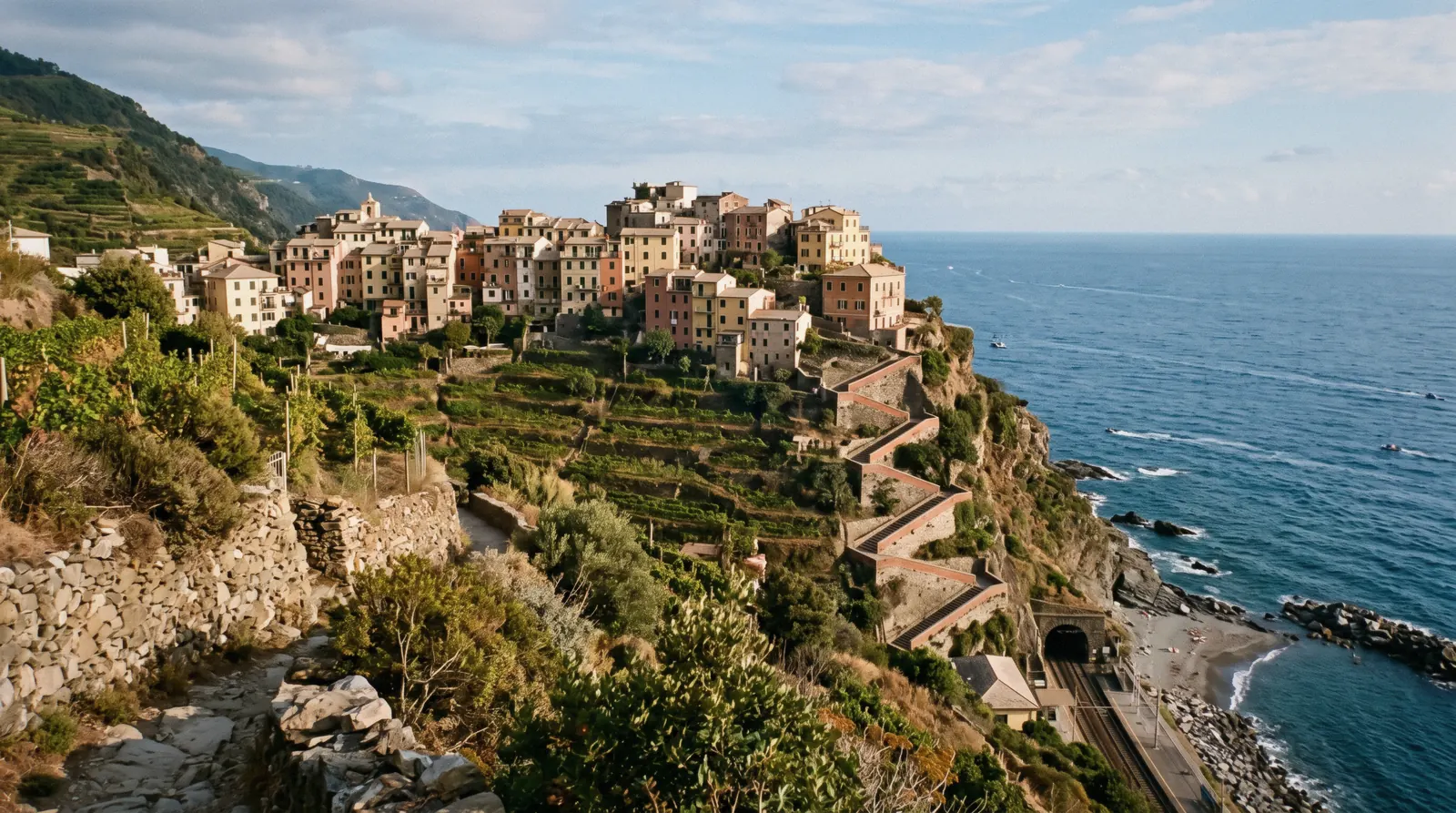
Corniglia, Cinque Terre
Corniglia is the middle village of the Cinque Terre and the only one that does not sit on the water. It stands on a promontory about 100 m above the sea, reached from its own train station by a staircase of 377 steps or by the park shuttle bus. That extra effort keeps the crowds down and gives the village a calmer feel than Vernazza or Manarola, its neighbours on either side. This page covers what makes Corniglia different, how to reach it, how long to give it and what the surrounding trails and villages put within reach. It is part of our Cinque Terre villages series.
Quick answer Corniglia at a glance
Corniglia has about 195 residents and sits at 105 m elevation, the only one of the five Cinque Terre villages not directly on the sea. It is a frazione of the comune of Vernazza, not its own comune. Entry to the village is free and it never closes. The catch is the climb: the train station sits at sea level and the Lardarina staircase adds 377 steps, or you can take the park minibus.
Key takeaways
- Walking into Corniglia costs nothing and needs no booking. What you pay for are the trails and the extras, from the Cinque Terre Card to the guided hiking tour from Manarola to Corniglia.
- There is no ferry stop here. The village sits about 100 m above the water, so it is reached by train, park bus or on foot only.
- Corniglia is mentioned in Boccaccio's Decameron and its quieter character helped inspire the Pixar film Luca. Start from our Cinque Terre guide or compare it with Monterosso al Mare.
Key facts
Opening hours
| Village access | Open–24 hours, year-round |
|---|
Closed Never closed
Planning it
- Time needed
- Not stated by any tourism office. Our estimate: one to two hours to see the village on the promontory, longer if the Lardarina or a trail hike is part of the visit
- Address
- Corniglia, 19018 Vernazza, Province of La Spezia, Italy
You can walk the lanes of Corniglia, climb the Lardarina and sit on the belvedere without spending a cent. The money questions start when you want to hike the coastal paths, ride the village buses or join a guided trek. The two most useful paid options for this village are set out below.
Corniglia itself is free to enter at any hour, so this table compares the paid ways to actually do something here: the park cards for the trails and the guided walking tour that ends in the village.
| Option | Price | Covers | Book ahead | Book |
|---|---|---|---|---|
| Cinque Terre Trekking Card, 1 dayAnyone walking the trail sections either side of Corniglia that day | US$11.37 (€10) | Trail access on the Sentiero Azzurro and the park's other paid paths, village buses, guided visits | Not needed, buy online or at an Info Point | Official site |
| The guided hiking tour from Manarola to CornigliaWalkers who want a guide on the trail rather than navigating the card and the path alone | $91.00 | Guided hike between Manarola and Corniglia with a local guide, 7.5 hours from La Spezia | Yes, small group | Check Availability |
Figures current in Q3 2026.
A Guided Way To See Corniglia On Foot
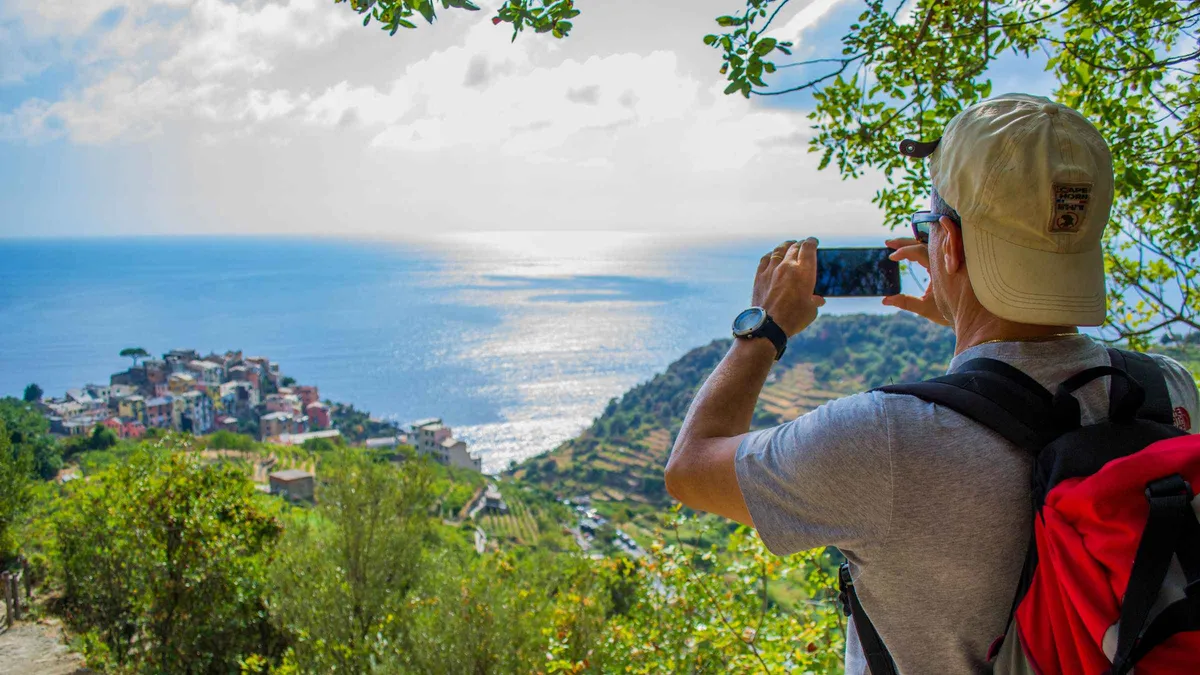
One operator runs a bookable hike that finishes in Corniglia, which suits travellers who want the trail explained rather than walked alone.
 from $91.00
La Spezia: Cinque Terre Guided Hiking Tour, Manarola to Corniglia
Shore Emotion leads a 3-hour trek along the coastal path from Manarola to Corniglia, with the Cinque Terre Card for the connecting trains built into the price. It rules out children under 8 and anyone with heart or back problems, since the path is uneven in places.
Check AvailabilityPrices, ratings and details are the platform's own. Dollar figures are the listed prices. The platform bills in your account's currency.
What Makes Corniglia Different
The Numbers
Corniglia counts about 195 residents on an area of 2 square kilometres, at an elevation of 105 m. Every other village in the Cinque Terre fronts the water. Corniglia alone stands back on its promontory, roughly 100 m above the sea, which is also why the seasonal ferry skips it.
Administratively it is a frazione of the comune of Vernazza, so when a figure for Corniglia is missing from official lists, look under Vernazza. The village sits at coordinates 44.119722 N, 9.7086111 E, dead centre on the Ligurian coast between its four neighbours.
A Roman Name And A Medieval Story
The name is traditionally traced to the Roman Gens Cornelia, a family said to have owned land here, a history summarised on the village's Wikipedia entry. In the Middle Ages the village passed through the counts of Lavagna and the lords of Carpena and Luni. Pope Innocent IV granted it to Nicolò Fieschi in 1254, and in 1276 it was acquired by the Republic of Genoa, as most of the coast eventually was.
Knowing this history matters little to your day plan, but it explains why the church and the street layout feel older and less showy than the harbour villages that traded by sea.
Source: https://en.wikipedia.org/wiki/Corniglia and Wikidata Q508135, checked 2026-09-24
Getting To Corniglia
By Train, Then On Foot
All five villages sit on the same Trenitalia regional line between Levanto and La Spezia Centrale, served by the reinforced Cinque Terre Express from mid-March to early November. Single fares use three date bands rather than distance: band A is US$5.68 (€5), band B US$9.09 (€8) and band C US$11.37 (€10), the same price for any journey on the line. Children aged 4 to 11 pay half.
A downloadable calendar on Trenitalia's site sets which band applies to which date, so check it before you travel. The fare bands were published for the 2025 season and should be re-checked for your travel dates.
| Fare band | Adult | Child 4-11 |
|---|---|---|
| Band A | US$5.68 (€5) | US$2.84 (€2.50) |
| Band B | US$9.09 (€8) | US$4.55 (€4) |
| Band C | US$11.37 (€10) | US$5.68 (€5) |
The Station Problem
Corniglia's station sits at sea level, well below the village on its promontory. Every arrival by train continues either up the Lardarina staircase, 33 short staircases totalling 377 steps by the figure this site uses, or on the park's shuttle minibus which connects the station to the village. Build this transfer into any timing.
If you have heavy luggage or limited mobility, the bus is the sane choice. The stairs take most walkers a steady 15 to 20 minutes, though no official source publishes a timing, so treat that as our estimate.
No Ferry, No Exceptions
The seasonal ferry run by the Consorzio Marittimo Turistico Cinque Terre Golfo dei Poeti calls at Riomaggiore, Manarola, Vernazza and Monterosso al Mare, plus La Spezia, Lerici and Portovenere. It does not call at Corniglia, because the village sits about 100 m above the sea and has no pier. You reach it only by train, bus or on foot.
That is the single biggest planning difference between Corniglia and the other four villages, and it is why boat-based day plans pair it with a hike instead. Our ferry page covers the routes that do exist.
By Car
Corniglia is not really a driving destination, and the geography that keeps the crowds down works against drivers too. The village sits on a promontory with narrow lanes built for feet, not cars, so there is no realistic way to park at the top and walk straight in. Anyone arriving by road has to leave the car well below the village and either climb the Lardarina or wait for the park's shuttle bus, the same choice a train passenger faces.
Our research found no official parking price or car park name specific to Corniglia, so we do not print one here. For the wider picture of where cars can and cannot go across the park, and which towns actually have usable car parks, see our parking page. The practical advice for most visitors is the same as for the train: leave the car in La Spezia or Levanto and let the railway do the work.
Source: https://www.trenitalia.com/it/regionale/liguria/prezzi-biglietti-cinque-terre.html and https://www.navigazionegolfodeipoeti.it/en/cinque-terre, checked 2026-09-24
The Village On Its Promontory
Why It Feels Quieter
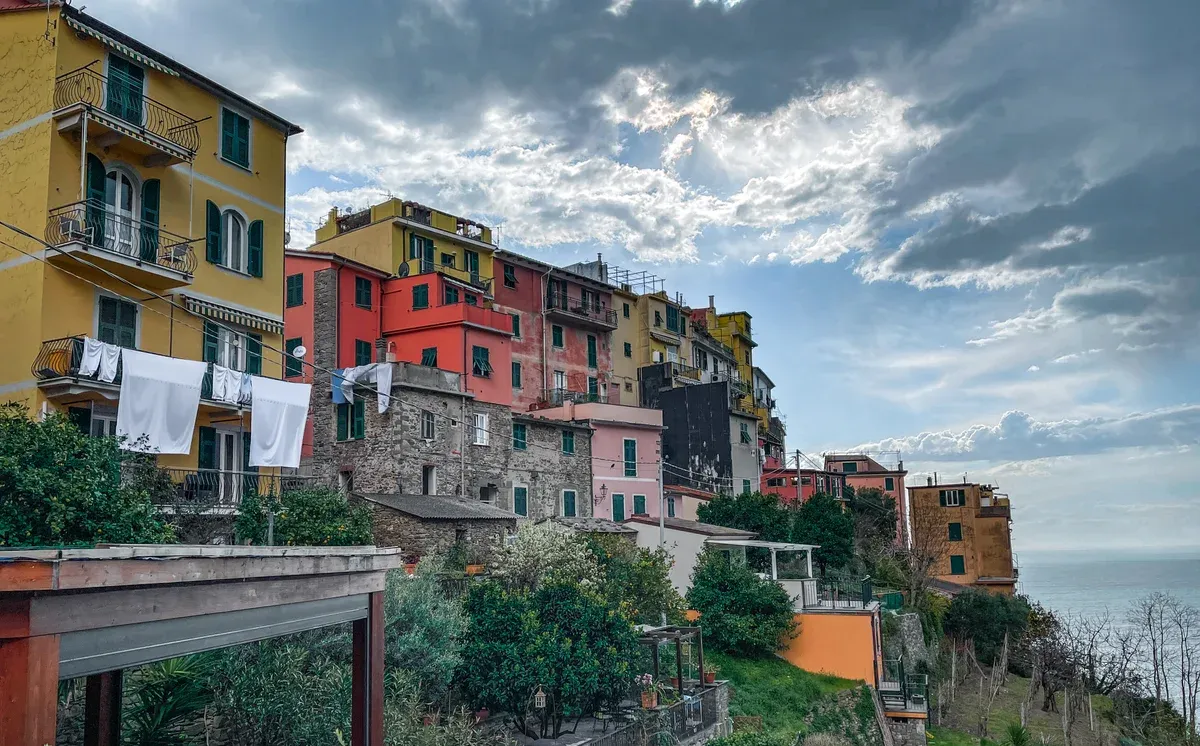
Corniglia is the only one of the five villages not directly on the sea. It is set back on a promontory rather than clustered around a harbour, which changes both the look and the rhythm of the place. Day-trippers who arrive by boat never come at all, and train arrivals face the staircase, so the numbers thin out at the top.
Even in peak season the lanes carry noticeably less traffic than the harbours of Vernazza or Manarola. The consequence for you is simple: if the crowds are the thing you fear most about the Cinque Terre, Corniglia is the village built for you, and it rewards the extra climb with calmer streets and clear views along the coast in both directions.
The Church Of San Pietro
The parish church of San Pietro was built between 1334 and 1351 of local stone. Inside are three naves in Baroque style, a rose window of white Carrara marble, and a 12th-century baptismal font kept from an earlier building on the site. It is the main historic monument in the village and sits in the old centre, a short walk from the belvedere.
Entry customs and opening hours for the interior are not stated in the sources we checked, so treat any visit as opportunistic. Combine it with the viewpoint terrace at the edge of the old town, which looks out over the vineyards and the sea below.
In Books And Films
Corniglia has a cultural footprint out of proportion to its size. Giovanni Boccaccio mentions it in the Decameron, written in the 14th century. More recently it was a reference point for the Pixar animation team making Luca, released in 2021, who were drawn to its quieter and less touristy character.
The film's Portorosso is a composite of the Cinque Terre towns, not a copy of this one. It also means the village photographs well without any staging, since the terraces and stone houses are the original article.
Wine Above The Village
The terraces above the villages grow Bosco, Albarola and Vermentino grapes, which go into Sciacchetrà, a DOC sweet wine produced across the Cinque Terre including Corniglia, Manarola and Riomaggiore. Ancient Roman writing praised the wine of this region, which gives you some idea how old the tradition is. A tasting is an easy way to spend part of a visit, and our Cinque Terre wine page covers the styles in detail.
No specific cantina in Corniglia has been verified against a citable list in our research, so we name none here.
Source: https://en.wikipedia.org/wiki/Corniglia, checked 2026-09-24
How Much Time To Give Corniglia
No tourism office publishes a recommended visit time for Corniglia, so the three routings below are our estimate. Use them to match the village to the day you actually have.
Three Realistic Routings
The fast version works because the village is compact: station, climb or bus, the belvedere, the lanes around San Pietro, and back down. The half day adds a trail leg in or out, which is where Corniglia earns a full morning or afternoon. The full day folds in the guided hike, which takes the navigation off your hands and ends in the village.
| Routing | What It Covers | Time (our estimate) |
|---|---|---|
| Fast pass-through | Train in, Lardarina or bus up, belvedere, village lanes and San Pietro, bus or stairs down, train on | 1 to 2 hours |
| Half day | The fast routing plus one trail leg, for example the coastal path to or from Vernazza, or a slow lunch in the village | 4-6 hours |
| Full day with a tour | The guided hiking tour from Manarola to Corniglia, 7.5 hours door to door from La Spezia, then time in the village before the train back | Full day |
Source: timings are our own estimates, no official figure is published by any tourism office
Corniglia In Dated Lines
The village's recorded history in eight steps, each sourced.
-
Roman era
The Gens Cornelia
Tradition traces the name Corniglia to the Roman Cornelia family, said to have owned land here.
-
1254
A papal grant
Pope Innocent IV granted Corniglia to Nicolò Fieschi.
-
1276
Genoa takes over
The Republic of Genoa acquired the village, folding it into the power that came to dominate this coast.
-
1334-1351
San Pietro built
The church of San Pietro was built of local stone, with a rose window of white Carrara marble.
-
14th century
Boccaccio mentions it
Corniglia appears in Giovanni Boccaccio's Decameron, an early literary nod to the village.
-
1997
UNESCO listing
The five villages became part of the UNESCO World Heritage site Portovenere, Cinque Terre and the Islands, site 826.
-
1999
National park
The Cinque Terre National Park was established, putting the trails and terraces around Corniglia under park management.
-
2021
Luca
Pixar's Luca used Corniglia as a reference point, drawn to its quieter, less touristy character.
Sources: Wikipedia (Corniglia), UNESCO World Heritage Centre listing 826, park establishment records.
Corniglia, Do And Do Not
Do
- Wear closed shoes with real soles. The park has banned flip-flops and open sandals on its paid trails since 2019, with fines reported from US$56.80 (€50) up to US$2,841.80 (€2,500).
- Buy the Trekking Card if you plan to walk a paid trail section, since it also covers the village buses you may want for the station climb.
- Check trail conditions on the official park site before setting out, because segments close for weather and maintenance.
- Take the Vernazza to Corniglia hike if you want one trail leg, then reward yourself with time in the village.
- Look up Sciacchetrà, the sweet DOC wine made from terraces above the village, and read our wine guide before choosing a tasting.
- Ride the park minibus down if you are tired or carrying bags. The 377 steps are optional, not a rite of passage.
Don't
- Do not plan to arrive by ferry. Corniglia has no pier, and the ferry calls only at the other four villages.
- Do not assume the train ticket covers the trails. The train fare and the park card are separate purchases.
- Do not attempt the coastal paths in sandals or after heavy rain without checking closures first.
- Do not book the guided hiking tour with young children. It rules out under-8s and anyone with heart or back problems, and the path is uneven in places.
- Do not expect a confirmed tourist tax figure here. Vernazza, the comune covering Corniglia, does not publish a confirmed rate, unlike Monterosso which charges US$3.41 (€3) per person per night.
- Do not treat published walking times between villages as official. No authoritative source lists them beyond what the park's own trail pages state.
Five Things Most Visitors Do Not Know About Corniglia
- It is the only village of the five that does not touch the sea, standing about 100 m up on its promontory, which is why the ferry never calls here (Wikipedia, Corniglia geography and the ferry operator's stop list). - It is not its own comune. Corniglia is a frazione of Vernazza, so municipal statistics and taxes route through Vernazza (Wikipedia, Corniglia). - The Lardarina has 33 short staircases and 377 steps by the figure this site uses. Some sources round to 383.
A park shuttle bus connects the station to the village, so the climb is optional (site facts pack and Wikipedia, Corniglia). - Boccaccio name-checked it in the Decameron in the 14th century, centuries before tourists arrived (Wikipedia, Corniglia culture). - Its quiet character helped inspire Pixar's Luca in 2021, and the film's Portorosso draws on all five villages (Wikipedia, Corniglia).
What Corniglia Puts Within Reach
Trail Legs From The Village
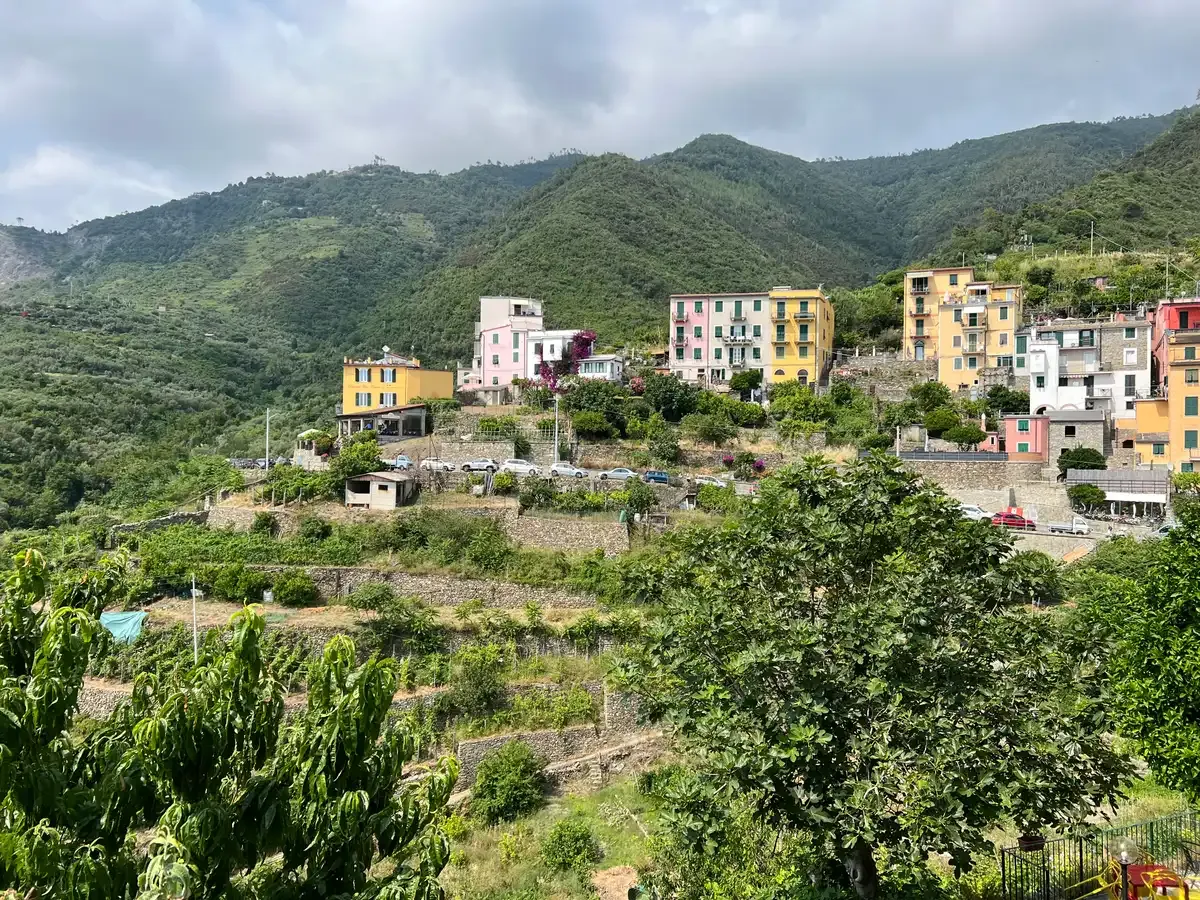
Corniglia sits mid-line on the coastal Sentiero Azzurro, so the two natural legs are toward Vernazza in one direction and toward Manarola in the other. The Vernazza to Corniglia hike is the classic full leg. The section from Manarola is what the guided hiking tour covers, a 3-hour trek with a local guide and the connecting trains built in.
Note that segment status changes with weather and maintenance, so check the park's own pages before you go. For a wider shortlist of viewpoints and walks, see our views page.
Neighbouring Villages
A single train stop in either direction puts you in Vernazza, with its Doria Castle and harbour, or Manarola, with its fishing and wine traditions. Slightly further lie Riomaggiore, the most southerly village, and Monterosso al Mare, which has the region's only extensive sand beach at Fegina. All are covered in our villages guide, and pairing Corniglia with one neighbour is the most common day shape in our one day itinerary.
Source: park trail and village pages, checked 2026-09-24
Corniglia On The Map
Vernazza
One train stop north, the harbour village with Doria Castle and the church of Santa Margherita d'Antiochia. The direct trail link makes a walk-in, train-out day easy.
Manarola
One stop south, the fishing and wine village whose coastal path to Corniglia is the leg covered by the guided hike. Its illuminated nativity scene runs each winter.
Sentiero Azzurro
The coastal trail network connecting the villages, of which Corniglia is the mid-point. Check current segment status before walking, as closures change with the weather.
Is Corniglia free to visit?
Yes. Walking into the village is free and it is open 24 hours, year-round, with no closed days. The only costs are transport to reach it, the park card if you walk paid trails, and any tour or tasting you add.
How many steps is the Lardarina in Corniglia?
The staircase from the station to the village has 33 short staircases totalling 377 steps by the figure this site uses. Some sources round to 383. If you would rather skip it, a park minibus connects the station to the village.
Can you reach Corniglia by ferry?
No. Corniglia is the only one of the five villages without a ferry landing. It sits on a promontory about 100 m above the sea with no pier, so it is reached only by train, park bus or on foot via the trails.
How long should I spend in Corniglia?
No tourism office publishes a figure. Our estimate is one to two hours to see the village itself, four to six hours for a half day with a trail leg or a slow lunch, and a full day if you join the guided hike from Manarola.
Is there a tourist tax in Corniglia?
No confirmed rate is published. Corniglia falls under the comune of Vernazza, which does not publish a confirmed tourist tax figure, unlike Monterosso al Mare which charges US$3.41 (€3) per person per night. Each comune sets its own rate.
Do I need to book anything for Corniglia?
Not to walk into the village. Booking is only needed for the extras: the Via dell'Amore requires a reserved slot, and the guided hiking tour from Manarola to Corniglia is a small-group booking that should be made ahead.
Where Corniglia Fits In A Day
Corniglia works best as the middle stop of a line trip: walk in from one neighbour, walk or train out to the other. Our one day itinerary pairs it with a single neighbour, the two day plan gives it a full morning, and the three day plan adds the inland trails. If you are building the whole trip from scratch, start at our planning hub.
Source: our itinerary planning, no official figure applies
Corniglia On Video
Cinque Terre, Italy: Hiking Corniglia to Manarola
Rick Steves walks the coastal path into Corniglia's neighbour, the same leg covered by the guided hike on this page.
Video: Rick Steves' EuropeCINQUE TERRE, ITALY: Everything You Need To Know About Cinque Terre
A full orientation to the five villages, useful for placing Corniglia in the wider park before you commit a day.
Video: World Wild HeartsCinque Terre Transportation Guide: How To Get Around Cinque Terre, Italy
How the trains, buses and boats fit together, which matters in Corniglia since the ferry never calls there.
Video: Sharing the RoadPrices, hours and terms are set by the venue or operator and confirmed at checkout.
We may earn a commission if you book through one of our links, at no extra cost to you. Full affiliate disclosure