 Cinque Terre City Guide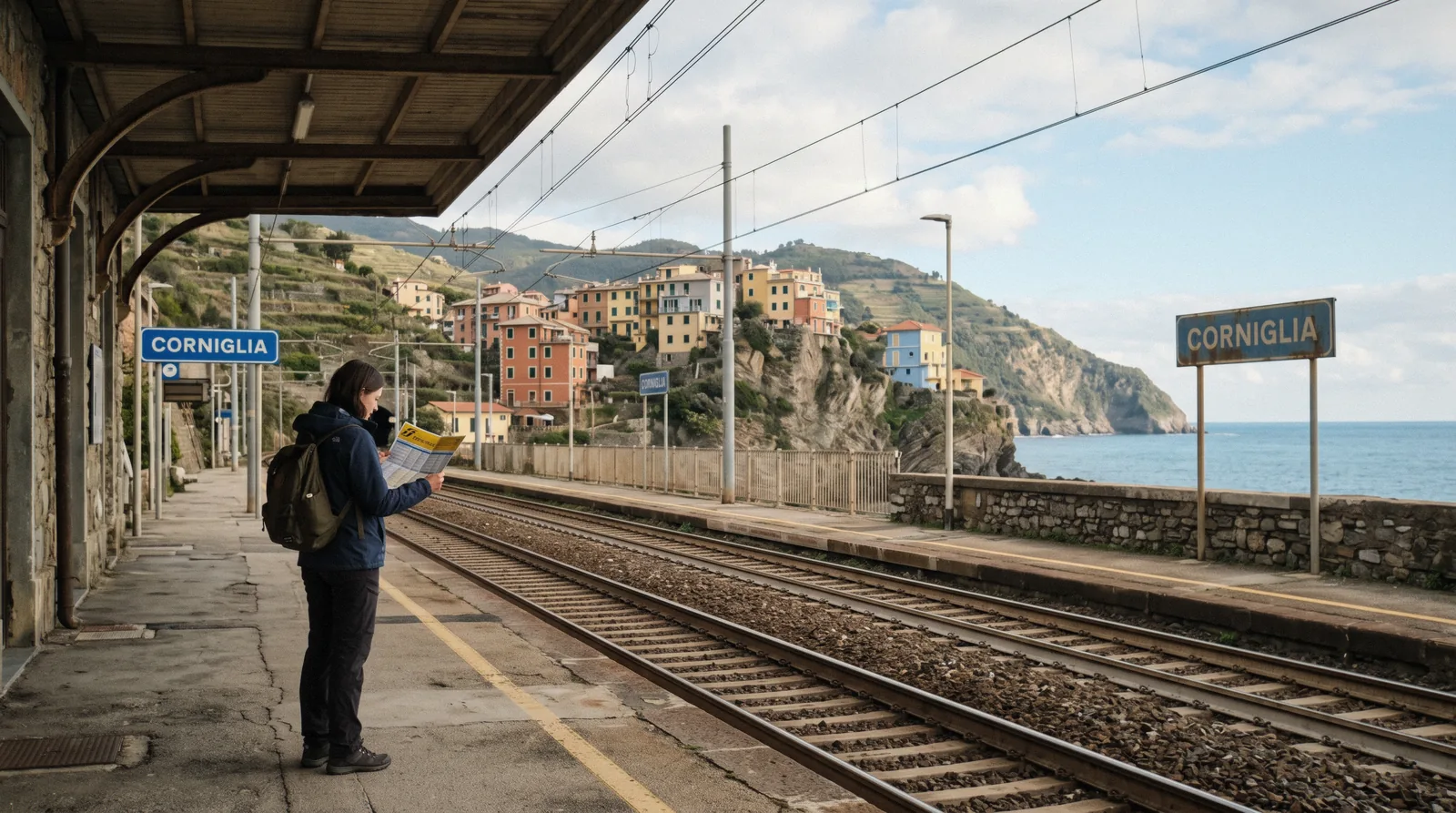
Cinque Terre Travel Tips: Plan Your Trip
These cinque terre travel tips bring every planning decision into one place, in the order you will actually hit them. You decide how to arrive, how to move along the coast, what to pay, when to come, where to sleep, and what to eat. Each section below points to a full page with the detail. The five villages are Monterosso al Mare, Vernazza, Corniglia, Manarola and Riomaggiore, all comuni in the province of La Spezia in Liguria. The area has been a UNESCO World Heritage site since 1997 and a national park since 1999. Populations are small: Monterosso counts 1,301 residents, Riomaggiore 1,250, Vernazza 670, Manarola 353 and Corniglia just 195. Small places, heavy demand, so planning matters more here than in a big city. Read the sections in order or jump straight to the one you need. For the rest of the coast, see the full Cinque Terre guide.
Quick answer The short version of planning a trip to the Cinque Terre
The simplest plan is to arrive by rail and move between villages by train, where a single one-way ticket on the line costs US$5.68 (€5) to US$11.37 (€10) depending on the date band, flat regardless of distance. Start with the decision order below: arrival, transport, money, timing, beds, food, rules.
Key takeaways
- A good first booking is the boat tour from La Spezia, eight hours along the coast for $79.00, which gives you the whole shoreline from the water before you pick favourites.
- If you plan to hike, you need a park card. The trekking card costs US$11.37 (€10) for one day and US$19.32 (€17) for two. There is no three-day version. The rail version costs US$25.00 (€22), US$41.50 (€36.50) or US$55.70 (€49) for one, two or three days.
- Trail status changes with the weather and a card does not override a closure. Check the current open and closed sections before you set out, and again the night before a long walk.
- Italian rail strikes are announced in advance on the ministry's public registry at scioperi.mit.gov.it, usually with guaranteed service windows. Check it the week you travel.
Getting There
The whole coast sits on a single rail line that runs from Levanto in the northwest through all five villages to La Spezia in the southeast. Every arrival plan ends on that line, whichever direction you come from. The full route pages sit on their own, so this is the overview: who comes from where, and what each route involves.
The One Line That Matters
Levanto, Monterosso, Vernazza, Corniglia, Manarola, Riomaggiore, La Spezia. That is the sequence, and every train on it stops at all of the park stations. It means your arrival point is really a choice between approaches to this one corridor.
From the south and east, most travellers funnel through La Spezia. From the north, Genoa and Milan push traffic down the coast toward Levanto and the western villages. From the west, Pisa and Florence feed the line from the La Spezia end.
Driving changes the picture, because the villages sit on cliffs with narrow roads and limited parking, and the parking page becomes essential reading instead of an afterthought. Flying in adds one more layer, since the nearest airports serve as gateways with their own transfer chains. Work through the routes below in the order that matches your starting point, and read getting around the Cinque Terre once you have settled your arrival.
The Six City Routes
Each route page covers the journey end to end, with connections, stations and what the last mile into the villages looks like.
Florence to the Cinque Terre. The classic Tuscan combination. You will change trains at least once, and the practical question is whether to change at Pisa or La Spezia, and what time of day the connections work best. The page lays out the options and the trade-offs: Florence to the Cinque Terre.
Rome to the Cinque Terre. The longest of the common routes. Expect a rail journey with at least one change, and plan for a full half day of travel, which argues for either an early start or an overnight stay near the coast rather than a rushed day trip. Details on Rome to the Cinque Terre.
Milan to the Cinque Terre. Coming from Lombardy you approach from the north, which often means arriving at the Levanto or Monterosso end of the line first. That changes which village makes the best base. The route page explains: Milan to the Cinque Terre.
Pisa to the Cinque Terre. Short, popular, and heavily used by people flying into Pisa airport. The airport-to-station link plus the coastal rail leg makes this one of the easier arrivals. See Pisa to the Cinque Terre.
Genoa to the Cinque Terre. From Liguria's own capital the coast road and the railway both hug the sea west of the park, and the rail approach comes down through Levanto. Read Genoa to the Cinque Terre.
Venice to the Cinque Terre. Cross the Po plain first, then drop south to the coast. This is the longest and most connection-dependent of the six routes, so timing matters most here: Venice to the Cinque Terre.
Flying In and Arriving by Sea
Two more arrival layers sit outside the rail network. The first is air: the airport page covers which airports serve the coast and how each connects onward, since transfer times and connections differ a lot between them. Read the airports page before you book flights, because the wrong gateway can add hours.
The second is sea: cruise passengers arriving at the La Spezia terminal have their own clock, shaped by the ship's all-aboard time, and the port page covers the transfer from terminal to the rail line and the realistic day-trip patterns. See the La Spezia cruise port page. Once you are on the ground, getting around the Cinque Terre is the page that ties trains, buses, boats and walking together, and the map page gives you the layout of the whole coast in one view.
Money and the Park Card
Three money questions shape the trip: which park card to buy, how the Via dell'Amore slot system adds a step even for card holders, and what you owe each village at night. The full costs page lives at Cinque Terre costs.
Trekking Card or Treno MS Card
The park sells two cards and the choice comes down to one question: are you hiking only, or hiking and riding trains?
The trekking card covers the paid trail sections, village buses, guided visits and park services. It costs US$11.37 (€10) for one adult day and US$19.32 (€17) for two. There is no three-day trekking card, so a three-day hiking trip means buying two cards. It does not include trains.
The Treno MS card adds unlimited second-class travel on the Levanto to La Spezia line on top of trail access. Adult prices are US$25.00 (€22) for one day, US$41.50 (€36.50) for two, and US$55.70 (€49) for three. Compare that with single tickets: a one-way journey on the line costs US$5.68 (€5), US$9.09 (€8) or US$11.37 (€10) depending on the date band, flat for any distance, with children aged 4 to 11 paying half. Our estimate: if you expect three or more train rides on a card day, the rail card wins. Hikers staying in one area do fine on the trekking card. Full comparison at the Cinque Terre card page, tickets overview at the tickets page.
| Card | 1 day adult | 2 days adult | 3 days adult | Includes trains |
|---|---|---|---|---|
| Trekking Card | US$11.37 (€10) | US$19.32 (€17) | No 3-day version | No |
| Treno MS Card | US$25.00 (€22) | US$41.50 (€36.50) | US$55.70 (€49) | Yes |
| Single train ticket | US$5.68 (€5) to US$11.37 (€10) per one-way trip | Same, by date band | Same, by date band | Not applicable |
The Via dell'Amore Slot Rule
The Via dell'Amore is the famous coastal path between Riomaggiore and Manarola. It runs one way only, from Riomaggiore to Manarola, and takes about 30 minutes. Two rules catch visitors out.
First, every individual visitor must book a time slot in advance, whether or not they hold a card. A card alone does not get you onto the path. Second, if you have no card at all, the supplement is US$11.37 (€10).
Bookings are made through the park's own channels and entry is only valid within your reserved time band. The hours also shift across the calendar: from 29 March to 24 October the path opens 09:00 to 21:00 with last entry at 20:30, and from 26 October to 28 March it opens 09:00 to 18:00 with last entry at 17:30. Plan the slot for early morning or late afternoon if you want the path quieter, and remember the walk finishes in Manarola, not where you started.
Tourist Tax
Monterosso al Mare charges a tourist tax of US$3.41 (€3) per person per night, confirmed at that figure, flat across accommodation types. That is the only rate verified on this coast. The other comuni set their own rates through their own portals, and those figures are not stated here because they have not been published in a form that could be verified.
Practical consequence: budget for roughly US$3.41 (€3) per person per night as a floor and expect the tax to be collected by your accommodation, either at booking or at check-in. Over a four-night stay for two people in Monterosso, our sum puts the confirmed charge at about US$27.30 (€24). The staying pages at where to stay and Cinque Terre hotels cover what to expect when booking.
Weather and When to Go
The coast has a clear rhythm: hot dry high summer, a wet autumn, and mild winters. Timing shapes crowds, prices and trail conditions all at once.
The Climate in Numbers
Long-term climate data for the coast show August as the warmest month, averaging 27.4°C. July is the driest month, with 42mm of rain. The wettest months are October and November, which each average 194mm. That pattern has direct consequences.
July and August give you reliable beach weather in Monterosso, whose Fegina district has the widest sandy frontage of the five villages. Autumn rain is the reason trail closures spike in October and November, and flash floods have hit these villages before, so autumn trips need a wet-weather fallback. Spring and early autumn sit in the middle: warm enough to swim for most people, wetter than summer but far drier than late autumn.
The full month-by-month picture is on the weather page, and the trade-offs between seasons, crowds and prices are worked through on when to visit.
Is It Worth the Trip?
Fair question, and worth answering honestly before you commit days of a short holiday to one stretch of coast. The case for the villages rests on their scale and their setting: five small settlements, the largest with around 1,300 residents, stacked on cliffs and terraced hillsides that have been worked for centuries, recognised by UNESCO since 1997 and protected as a national park since 1999. The case against is crowding, since demand far exceeds what 3,769 residents across five villages can absorb.
Our honest position is that the trip rewards travellers who plan ahead, arrive early or stay overnight, and accept that the villages are small places rather than a long list of attractions. If that trade does not suit you, La Spezia and Levanto offer a similar coastline with more room to breathe. Decide with the full argument on is the Cinque Terre worth visiting.
How Do You Even Say It?
It comes up more than you would think, from ordering at a counter to asking a station guard which platform. Cinque Terre is pronounced CHEEN-kweh TEH-reh, with the emphasis on the first syllable of each word, and the final double r of Terre is a short rolled sound that takes a little practice. Cinque means five and terre means lands, so the name simply means five lands.
Getting it roughly right earns a smile and makes every interaction on the coast smoother, from the ticket window to a restaurant door. A fuller breakdown with the individual village names is on the pronunciation page.
Events Worth Timing a Trip Around
Some travellers shape their dates around what is on. The best-known seasonal event is the illuminated nativity scene on the hillside above Manarola, built from recycled materials since 1961 and lit each Christmas season, visible from the village for free. Religious feasts, food festivals and smaller local celebrations run through the year across the five villages and in neighbouring towns.
Timing a trip around an event adds atmosphere but also local crowds and fuller trains, so book beds earlier if you do. The calendar and its practical implications are on the events page.
Rules, Safety and What Goes Wrong
Three things cause most avoidable trouble on this coast: wrong footwear on the trails, ignoring closures, and getting caught by a rail strike. All three are easy to plan around.
The Footwear Ban
Since 2019 the national park bans flip-flops and open sandals on its hiking trails. Fines reported in the Italian press range from US$56.80 (€50) to US$2,841.80 (€2,500), depending on the trail section and the risk created. The rule sounds strict until you see the paths: steep stone steps, loose ground, sheer drops in places, and summer heat that makes sandals genuinely dangerous.
Beach shoes are fine on the beach in Monterosso, and nobody will fine you for wearing them in the village lanes. The rule applies to the trails. Pack closed shoes with a grip sole if any walking is on your list, and treat this as non-negotiable rather than a technicality.
Broader safety advice, from heat to sea conditions, is on the safety page.
Trail Closures
Trails close after rain, for maintenance, and for safety work, and closures follow the weather rather than the calendar. The key point for planning is this: your park card does not override a closure. A trekking card buys access to open paid sections, not to closed ones, and rangers turn walkers back at closed gates.
Before a trip that depends on hiking, check the current status of each section, particularly the coastal Sentiero Azzurro segments between Monterosso, Vernazza, Corniglia, Manarola and Riomaggiore, because conditions differ segment by segment. Re-check the night before a long walk, not just when you book. The practical consequence is to build a plan B into every hiking day, usually a train-based village day or a lower-level walk.
Current conditions and route-by-route detail are on the hikes page.
Rail Strikes
Italian rail strikes are a normal part of national life, not a sign of chaos. The defining feature for travellers is notice: strikes are announced in advance on the ministry's public registry at scioperi.mit.gov.it, and they usually come with guaranteed service windows, hours in which trains must run. That turns a strike from a surprise into a scheduling problem.
Check the registry in the week before you travel, and again the day before a critical journey such as an airport transfer. If a strike falls on your travel day, move the journey inside the guaranteed window, or earlier, or accept a slower bus-based alternative along the coast. The full playbook, including how the windows work, is on the strikes page.
Planning Around Who You Are With
The same five villages play very differently for a family with small children, a couple dodging rain, or an arrival with heavy bags. Three planning angles follow.
Travelling With Children
Children change the maths on this coast. Steep village lanes, the 377-step Lardarina staircase at Corniglia, and hot midday hours all argue for a slower pace and fewer villages per day. The practical wins: trains between stations are short and frequent in season, Monterosso has the widest sandy beach for actual play time, and children aged 4 to 11 pay half fare on the rail line.
Pushchairs are hard work on stairs, so carriers beat buggies for toddlers. Keep one village per half day as the pace, with gelato as the reward structure. Full itineraries and tips are on the Cinque Terre with kids page.
A Rainy Day Plan
October and November each average 194mm of rain, so a wet day is a realistic part of an autumn trip, and spring showers happen too. The villages are compact enough that a rainy day is not a write-off: churches, covered lanes, long lunches, and the viewpoint terraces between showers all work. Trains run in the rain, so moving between villages stays easy, which is exactly why the rail card earns its price on wet weeks.
The one thing rain genuinely rules out is the high trails, and closures follow. Have the fallback list ready before you arrive rather than deciding under an umbrella. Ideas and itineraries are on the rainy day page.
Luggage
The villages were built long before rolling suitcases, and the walk from many accommodation addresses starts with stairs. Two questions to answer before you book. First, how far is your bed from the station, in stairs and in minutes, because that determines how painful every arrival and departure will be.
Second, if you are passing through rather than staying, what do you do with a bag for the day. Storage options exist on the coast and at nearby hubs, and using them turns a baggage chore into a hands-free village visit. Pack light as the first line of defence: a bag you can carry up three flights changes which accommodation is realistic.
Details on the luggage storage page.
Food and Evenings on the Coast
Food is a reason to come here, not just fuel between viewpoints. The coast has its own kitchen, its own wines, and a quieter evening rhythm than most visitors expect.
What to Eat and Drink
The Ligurian kitchen is built on the sea and on terraced hillsides: anchovies, seafood caught off these very cliffs, focaccia at any hour, pesto on fresh pasta, and vegetable dishes from the terraces. Wine is a serious local product too, grown on steep vineyard terraces that shape the whole landscape you walk through, with white wines made from local grape varieties you will struggle to find elsewhere. Practical tips: eat where the locals are eating rather than at the first terrace with a view, book dinner in high season because tables are few in villages of a few hundred residents, and try the catch of the day at lunch in Monterosso or Vernazza.
The dishes and where they come from are on the typical food page, and the wines and their terraces on the wine page.
Nights on the Coast
Evenings here are not a nightlife scene in the city sense. The villages are small, residents head home, and the evening is a passeggiata, an aperitivo, a long dinner, and early nights. That suits most visitors perfectly, but it is worth knowing before you plan a late schedule.
The practical consequences: last trains between villages run earlier than a city timetable, so if you dine in a different village from where you sleep, check the return service. Summer evenings on the water, including sunset boat runs, are the exception rather than the rule. What actually happens after dark, village by village, is on the evenings page.
Every Planning Page, Grouped by Decision
This hub indexes the whole planning layer of the site. The groups follow the order in which you make decisions, from arrival to the small practical details. Open the page that matches the decision in front of you.
-
Florence to Cinque Terre
Route options from Tuscany's capital, with the connection points and timings that decide whether it works as a day trip or an overnight.
-
Rome to Cinque Terre
The longest common route, planned as a half-day journey with the change points spelled out.
-
Milan to Cinque Terre
The northern approach, which tends to land you at the Levanto end of the coast and changes your choice of base.
-
Pisa to Cinque Terre
The short route most flown-in travellers take, from airport platform to coastal station.
-
Genoa to Cinque Terre
Down the Ligurian coast through Levanto, the natural route if you start in the region's capital.
-
Venice to Cinque Terre
Cross the plain and drop to the coast, the route where connection timing matters most.
-
Cinque Terre Airports
Which airports serve the coast and how each one connects onward, worth reading before booking flights.
-
La Spezia Cruise Port
From cruise terminal to the villages, planned around the ship's all-aboard time.
-
Getting Around Cinque Terre
Trains, buses, boats and feet, and when each one is the right choice.
-
Cinque Terre Train
The line that carries almost everyone, with fares, frequency and station practicalities.
-
Cinque Terre Parking
Where cars can actually go, what it costs, and why arriving by rail is usually easier.
-
Cinque Terre Ferry
The seasonal boat service along the coast, run by the Consorzio Marittimo Turistico Cinque Terre Golfo dei Poeti, with Corniglia the one village without a pier.
-
Transport Strikes
How Italian rail strikes work, the ministry registry, and the guaranteed windows you can plan around.
-
Kayak and Boat Rental
Getting onto the water under your own power, with the rules that apply inside the protected area.
-
Cinque Terre Costs
What a trip actually adds up to, from cards and tickets to tax and meals.
-
Cinque Terre Weather
Month by month, with August the warmest at 27.4°C and October and November the wettest at 194mm each.
-
Best Time to Visit
Seasons weighed against crowds, prices and trail conditions.
-
Is Cinque Terre Worth Visiting
The honest case for and against, so you can decide before committing days.
-
How to Pronounce Cinque Terre
CHEEN-kweh TEH-reh, plus the village names, said out loud.
-
Cinque Terre Events
Festivals and seasonal happenings, including Manarola's hillside nativity lit each Christmas season.
-
Cinque Terre Hotels
What hotel stock exists in villages of a few hundred residents, and how to choose between them.
-
Cinque Terre Apartments
Self-catering options, and why they suit families and longer stays on this coast.
-
Typical Food
Anchovies, pesto, focaccia and the rest of the Ligurian kitchen, dish by dish.
-
Cinque Terre Wine
The wines grown on the terraces you walk past, and where to taste them.
-
Cinque Terre at Night
What the villages are like after dark, and the train times that shape your evening.
-
Cinque Terre With Kids
Pace, beaches, half fares for children aged 4 to 11, and the stairs to plan around.
-
Rainy Day Cinque Terre
A ready-made plan for the wet days that autumn makes likely.
-
Cinque Terre Safety
Footwear rules, heat, sea conditions and the fines reported for the trail ban.
-
Cinque Terre Luggage Storage
Where to leave a bag, and why packing light matters more here than most places.
-
Best Views
The terraces and viewpoints worth building a route around, from Punta Bonfiglio in Manarola to Santa Maria in Corniglia.
-
Free Things to Do
Churches, lanes, beaches and viewpoints that cost nothing.
Book the First Thing on the List
Two general-purpose experiences are booked more than any others through this site, and both make sense early in a trip because they orient you to the whole coast. Figures current in Q3 2026.
 from $79.00
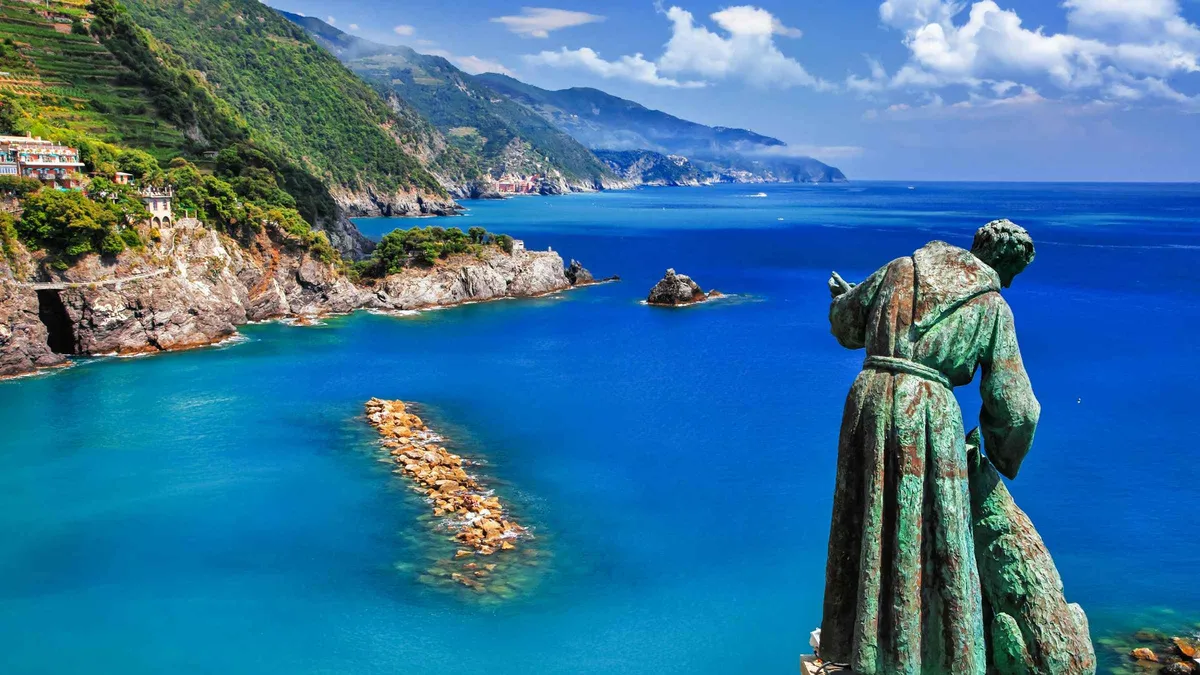
La Spezia: Cinque Terre Tour by Boat to Riomaggiore and Monterosso
With over 3,400 reviews this is the most-booked boat tour out of La Spezia: an 8-hour return ferry with a guide aboard, choosing either a Portovenere-Monterosso-Vernazza route or a Riomaggiore-Monterosso-Vernazza one. It is not wheelchair accessible.
Check Availability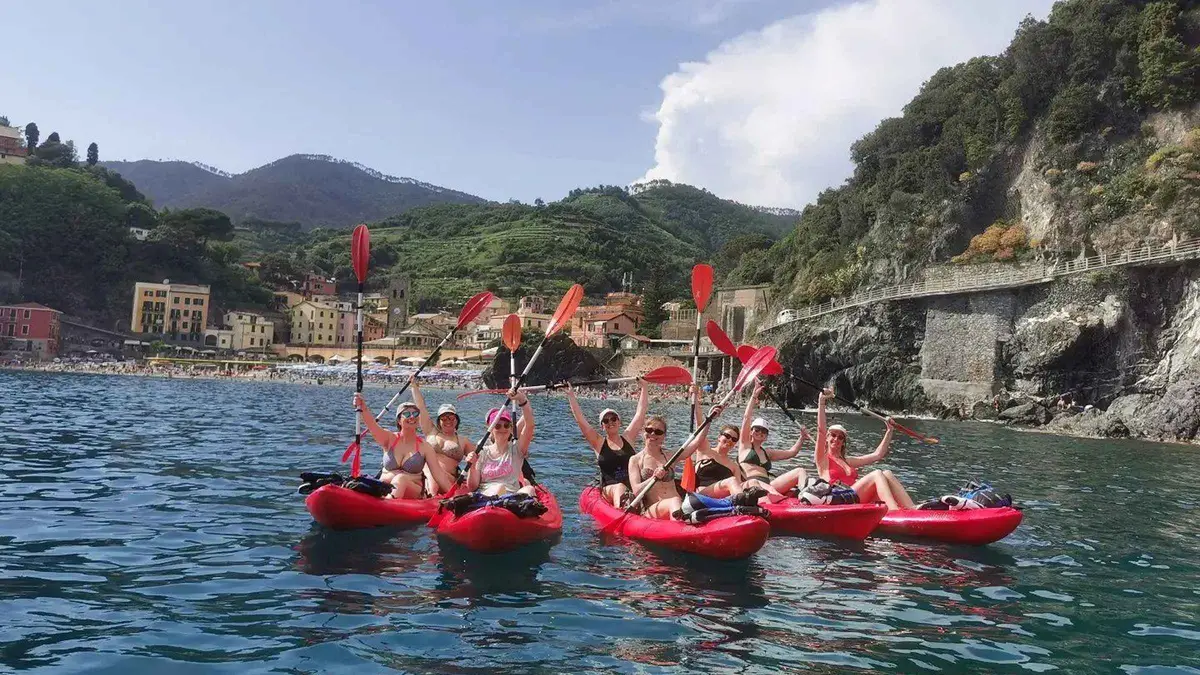 from $85.00
Monterosso: Kayak and Snorkeling Tour
Carnassa runs this two-hour kayak-and-snorkel outing from a beach bar in Monterosso, gear included. It is capped to swimmers under 220 lbs and is off-limits to anyone with a bad back or a child under 6.
Check AvailabilityPrices, ratings and details are the platform's own. Dollar figures are the listed prices. The platform bills in your account's currency.
Where to Go Next
Four onward pages cover the decisions this hub leaves open, plus the thing to do once the logistics are settled. Back to the Cinque Terre, Italy guide for the five villages themselves.
Once arrival is settled, the next decision is how you move between the five villages, and this page compares every option.
Choosing a base village is the biggest comfort decision of the trip, and the stay pages break down what each offers.
For the full budget picture beyond cards and tax, the costs page adds up a realistic trip.
When the logistics are done, the activities page lists what to actually do with your days.
Cards, trail tickets and train fares compared in one place, with the booking rules that apply to each.
Cinque Terre Travel Tips: Questions
How many days are ideal for the Cinque Terre?
Most travellers are well served by two or three nights. One long day lets you see two or three villages by train but leaves no time for walking or swimming. Two nights give you a full day for the villages and a second for either the coastal trail or the water, and a third night covers bad weather or a slower pace. There is no three-day trekking card, so a three-day hiking stay means combining cards. See the costs page for the budget picture and when to visit for seasonal trade-offs.
Why can't you wear flip-flops in the Cinque Terre?
The national park has banned flip-flops and open sandals on its hiking trails since 2019 because the paths are steep, stony and exposed, and thin soles cause falls and rescues. Fines reported in the Italian press run from US$56.80 (€50) to US$2,841.80 (€2,500) depending on the section and the risk. You can wear sandals in the villages and on the beach without any problem, the rule applies to the trails only. Closed shoes with a grip sole are the answer. More rules and safety notes on the safety page.
What is the best way to travel around the Cinque Terre?
The train, for almost everyone. The line links Levanto, all five villages and La Spezia, and a one-way ticket costs US$5.68 (€5) to US$11.37 (€10) depending on the date band, flat regardless of distance, with children aged 4 to 11 at half price. If you ride three or more times a day, the Treno MS card at US$25.00 (€22) for one day usually works out cheaper. Boats are a scenic seasonal extra and reach no Corniglia, since that village has no pier. The full comparison is on getting around.
Are there towns to skip in the Cinque Terre?
This page recommends skipping none of them. Each village earns its place: Monterosso has the widest beach, Vernazza its harbour and castle, Corniglia the one village set high above the sea at about 90 metres, Manarola its viewpoint terraces and hillside nativity, Riomaggiore its castle of 1260 and the start of the Via dell'Amore. What varies is how much time each deserves, and that depends on season, fitness and interests. The honest comparison of all five, with what each does best, is on the villages page.
Do I need cash in the Cinque Terre?
Not stated. No verified source on this coast sets out where cards are accepted or where cash remains necessary, so we will not guess. The safe practical habit in small villages anywhere in Italy is to carry some euros for small purchases, market stalls and the odd bar, while expecting hotels, restaurants and ticket channels to take cards. Budget figures for the things that are published, from cards to the tourist tax, are on the costs page.
What should I pack for the Cinque Terre?
Start with footwear, because the rules demand it: closed shoes with a non-slip sole for any trail walking, since flip-flops and open sandals are banned on park trails and fines are reported up to US$2,841.80 (€2,500). Add a light rain layer, because October and November each average 194mm and closures follow the weather. In summer, swimwear for Monterosso's beach, sun protection, and a refillable bottle. Pack light overall, because village access means stairs. The full list and reasoning are on the safety page.
Planning a Cinque Terre Trip on Film
Three practical planning walk-throughs worth watching before you book anything.
Cinque Terre Travel Guide: 3 Day Itinerary, Best Villages and Tips
A planning-focused run-through covering itinerary and village choice.
Video: Takeoff and LanningWorst Things About Visiting Cinque Terre Italy
An honest look at the planning mistakes and surprises this hub tries to prevent.
Video: Jimmy & BabsActually Visiting All of Cinque Terre: Full Guide
A fuller planning guide across all five villages.
Video: Near From Home | Slow Travel GermanyVideos load from YouTube only when you press play.
Prices, hours and terms are set by the venue or operator and confirmed at checkout.
We may earn a commission if you book through one of our links, at no extra cost to you. Full affiliate disclosure