 Cinque Terre City Guide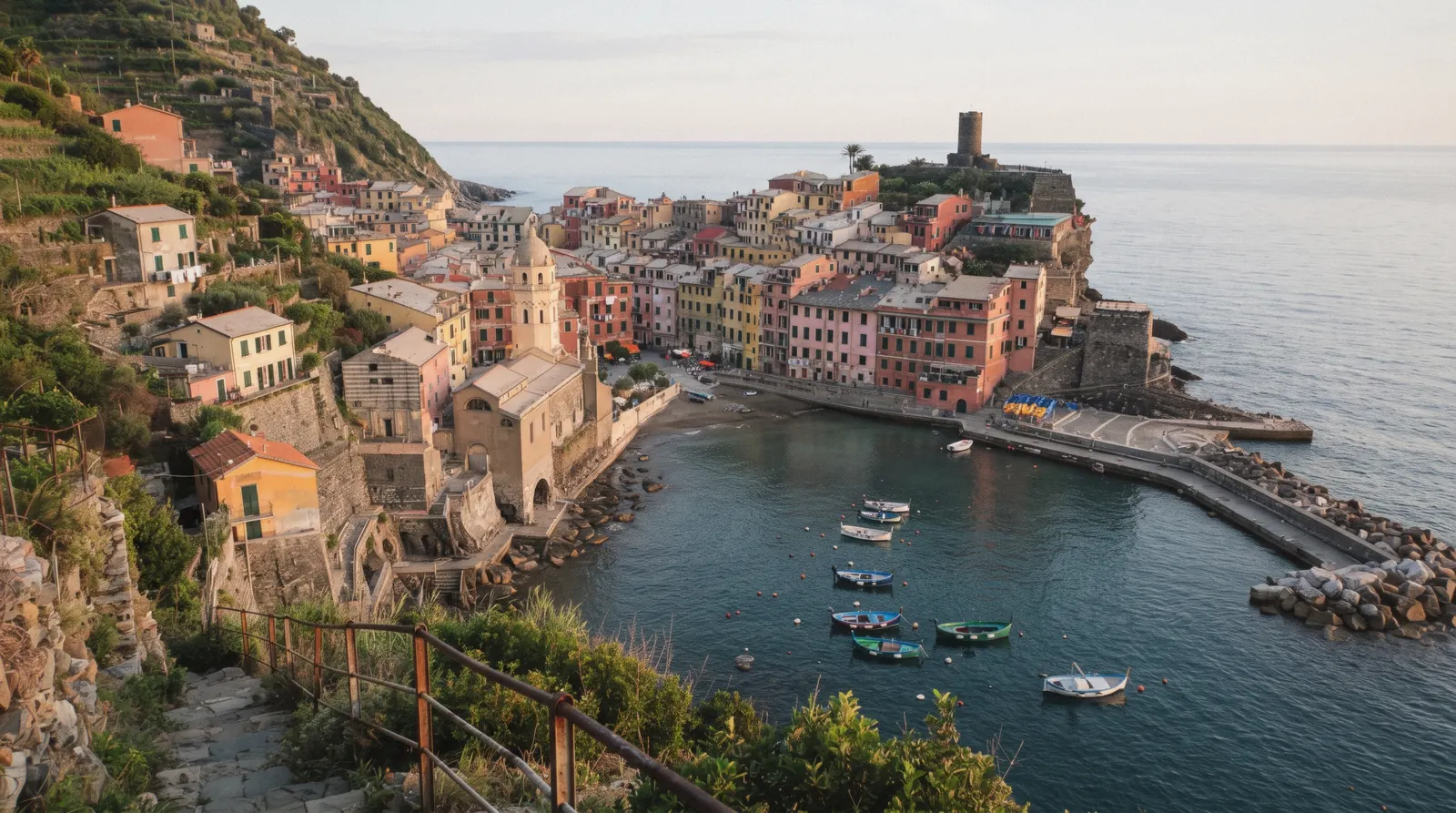
Is the Cinque Terre Worth Visiting?
Is Cinque Terre worth visiting? For most travellers, yes, with conditions attached. UNESCO listed the coast as a World Heritage Site in 1997, and the five villages are genuinely different from each other rather than five copies of the same view. The honest downsides are real too: the busiest service calendar runs the same months as the busiest conditions, the trails are paid and can close in a storm, and doing the trip properly costs more than the free-village myth suggests. This page lays out the case for going, the real trade-offs, and who should reconsider the timing. The UNESCO listing itself is recorded on the World Heritage Centre's own listing. For the full trip, start with our guide to what to see in Cinque Terre.
Quick answer Is it worth it, in one paragraph
Yes, for most travellers. UNESCO listed this coast as a World Heritage Site in 1997, and two full days is the honest minimum to see all five villages properly. If you only have one day, it can still work.
Key takeaways
- The five Cinque Terre villages are genuinely different from each other, not five copies of the same postcard.
- Rain peaks in October and November, so timing matters. See our weather guide for month by month rainfall.
- Walking into every village is free, but trails, trains and boats add up. Read what it really costs before you go.
- Two days beats one. Our 2 day itinerary shows how to cover all five villages and one long trail.
Is It Worth It For You
The honest split, before you book anything.
Go If
- You want a World Heritage cultural landscape of terraced cliffs and five historic villages
- You like the idea of five distinct village characters rather than one uniform resort strip
- You prefer car-free travel, because one railway line links every village through tunnels
- You enjoy walking between villages on a paid footpath network over the terraces
- You want real variety, from Monterosso's wide sandy beach to Riomaggiore's 1260 castle
Think Twice If
- You hate sharing narrow streets, because peak train and ferry service means peak crowds
- You expected free trails, because the park charges for footpath access and fines wrong footwear
- You can only travel in October or November, the two wettest months at 194mm of rain each
- You have a single rushed day and refuse to skip villages or the long trails
- Your budget is tight, since one full boat plus train day totals about US$72.70 (€64)
The Case for Going
What the coast actually offers, beyond the postcard.
A World Heritage Landscape With Five Genuinely Different Villages
UNESCO inscribed this coast in 1997 as a cultural landscape, recognising the historic layout of the small towns and the terraced, human-shaped coastline. That matters because the villages are not interchangeable. Monterosso al Mare, population 1,301, is the only one with a wide sandy beach.
Vernazza, population 670, has the small harbour that appears in almost every photograph of the coast. Corniglia, population 195, sits about 100 metres above the sea and is reached by a staircase of 377 steps or a shuttle bus. Manarola, population 353, looks its best at sunset from the Punta Bonfiglio viewpoint.
Riomaggiore, population 1,250, keeps a castle built in 1260 in the upper part of the old town. The national park followed the UNESCO listing in 1999, and a network of footpaths links the villages over the terraces, so the landscape you walk through is the same one that earned the inscription. If your idea of a good trip is variety packed into a small, walkable area, the case for coming is strong.
Read our guide to the Cinque Terre villages.
The Logistics Case: No Driving, One Train Line, One Ferry
No visitor road links the villages, and that is a feature, not a problem. One railway line runs from Levanto to La Spezia and threads all five villages through tunnels, so getting around is a matter of stepping on and off trains rather than negotiating coastal traffic or hunting for parking that does not exist. The reinforced Cinque Terre Express service runs from mid March to early November, roughly every 15 minutes at peak, which makes village hopping simple.
A seasonal ferry calls at four of the five villages and never at Corniglia, which has no pier, so the boat doubles as a scenic tour of the coastline. Everything is close together. The train between neighbouring villages takes minutes, and the footpath network links the same places on foot if you want the terraces instead of the tunnels.
Compared with coastal destinations where a car is close to essential, the freedom of arriving by train and never thinking about parking again is a real argument for choosing this coast. Check our Cinque Terre costs page to see how the transport pieces add up. For the same villages without planning the train and ferry legs yourself, a guided cinque terre day tour is an easy next step, and the options are gathered under cinque terre tours.
The Honest Downsides
Three trade-offs the postcard version of this coast leaves out.
The Busy Season Is Long and the Villages Are Small
No research pack publishes a visitor count by month, so here is the honest inference from the service calendar instead of an invented statistic. The reinforced train service runs mid March to early November. The ferry main season runs from 20 April to 27 September, with shoulder windows either side and a reduced winter timetable to 8 December.
The operator runs its fullest schedules exactly when demand is highest, so the longest window of maximum service is also the window of maximum pressure on villages with populations of a few hundred to about 1,300 people. Narrow lanes, one harbour and 377 steps do not expand for peak season. If you come in July or August, expect the train platforms, the Vernazza harbour and the Punta Bonfiglio viewpoint to be at their most contested, and expect the hottest weather, with August averaging a high of 27.4C (81F).
Travelling at the edges of the service calendar is the practical answer. Our best time to visit Cinque Terre page maps the windows.
The Trails Are Paid, Regulated and Can Close
The footpath network over the terraces is the reason many people come, and it comes with rules. Access to the paid coastal sections requires a Cinque Terre Card. The Via dell'Amore, the short walk between Riomaggiore and Manarola, needs a booked timed slot for every individual visitor, card or not, and it runs one way from Riomaggiore to Manarola.
Since 2019 the park has banned flip-flops and open sandals on its trails, with reported fines from US$56.80 (€50) up to US$2,841.80 (€2,500). The bigger issue is weather. October and November are the wettest months, each averaging 194mm of rain, and the park closes trail sections after storms.
The card does not override a closure, so a section you planned to walk can simply be shut. Check the park's trail status before you set out and build a plan B that uses the train. Our Cinque Terre weather page shows the monthly rainfall pattern.
Doing It Properly Costs More Than a Free Day Out
Walking into any village costs nothing, and that is worth saying clearly. But the version of the trip most people picture, trains between all five villages plus a ride on the ferry, has a real price. A day using the Treno MS card plus a ferry roundtrip sums to about US$72.70 (€64) by our own calculation.
Add a trekking card or the Via dell'Amore supplement if you want the trails, and remember the Via dell'Amore booking is required on top. If you stay overnight, Monterosso al Mare charges a tourist tax of US$3.41 (€3) per person per night. None of this makes the coast expensive by the standards of a European holiday, but it is not the zero-cost stroll some social media posts imply, and the bill doubles quickly for a family.
Plan for it, decide which pieces you actually want, and the value is easy to defend. The full breakdown sits on our Cinque Terre costs page.
If You Have Decided to Go
Two ways to start, a booked boat or a guided walk. Prices are the platforms' own listed US-dollar figures.
 from $79.00
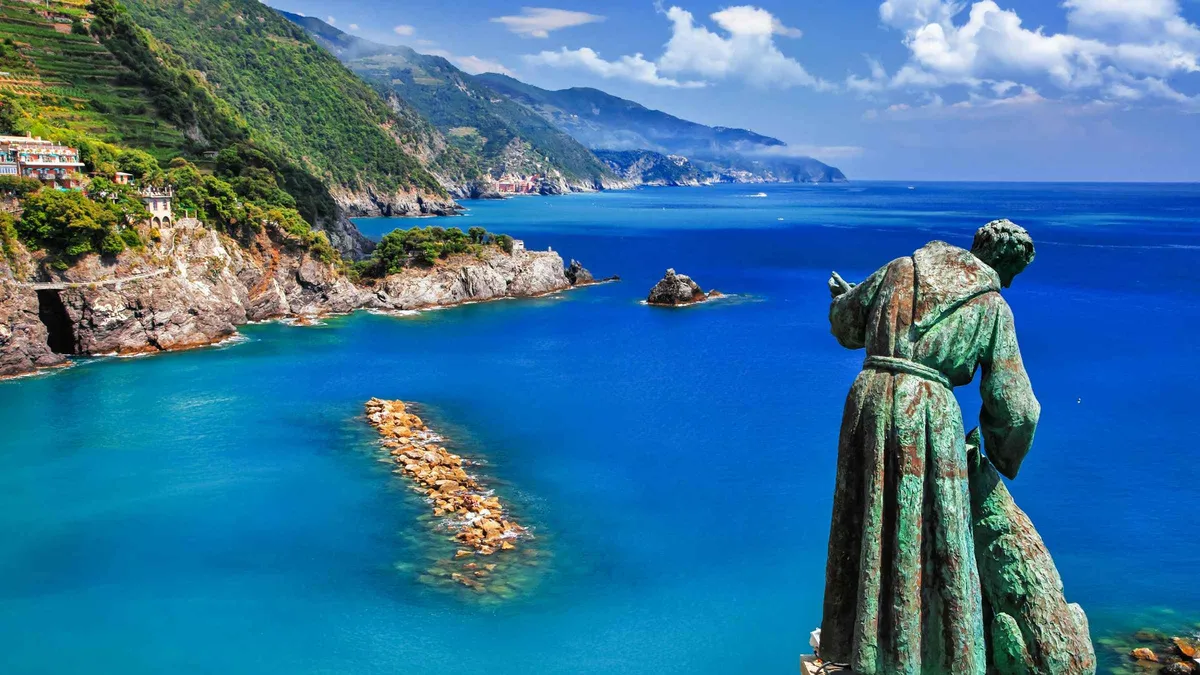
La Spezia: Cinque Terre Tour by Boat to Riomaggiore and Monterosso
With over 3,400 reviews this is the most-booked boat tour out of La Spezia: an 8-hour return ferry with a guide aboard, choosing either a Portovenere-Monterosso-Vernazza route or a Riomaggiore-Monterosso-Vernazza one. It is not wheelchair accessible.
Check Availability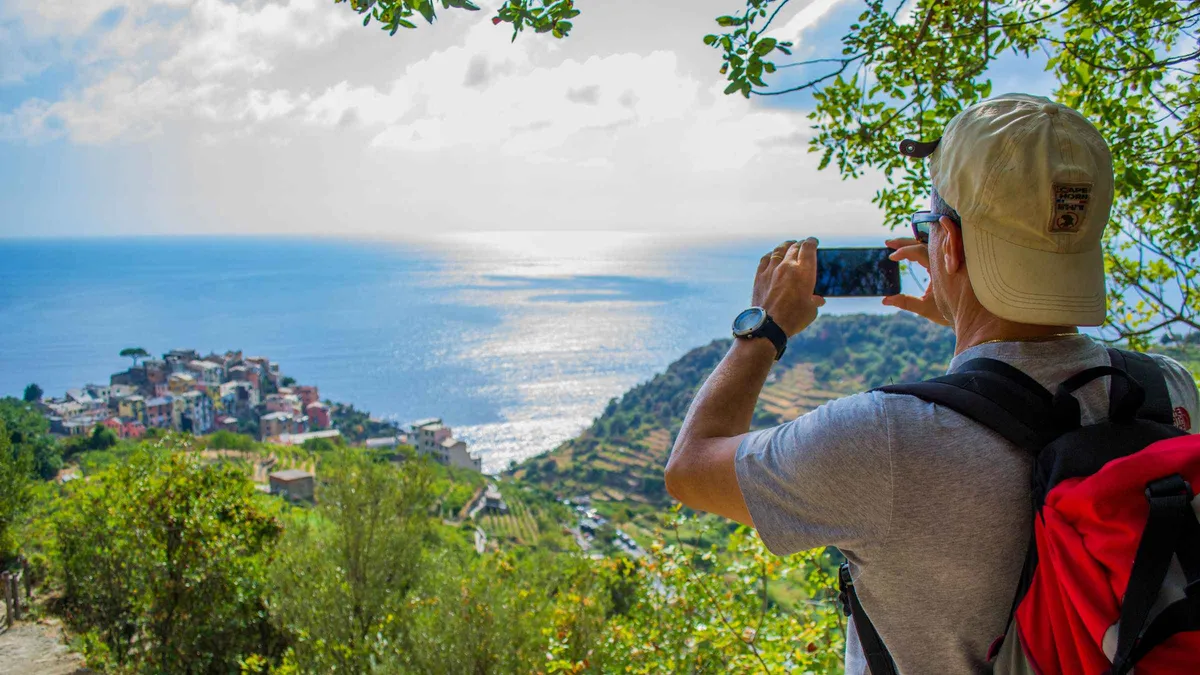 from $91.00
La Spezia: Cinque Terre Guided Hiking Tour, Manarola to Corniglia
Shore Emotion leads a 3-hour trek along the coastal path from Manarola to Corniglia, with the Cinque Terre Card for the connecting trains built into the price. It rules out children under 8 and anyone with heart or back problems, since the path is uneven in places.
Check Availability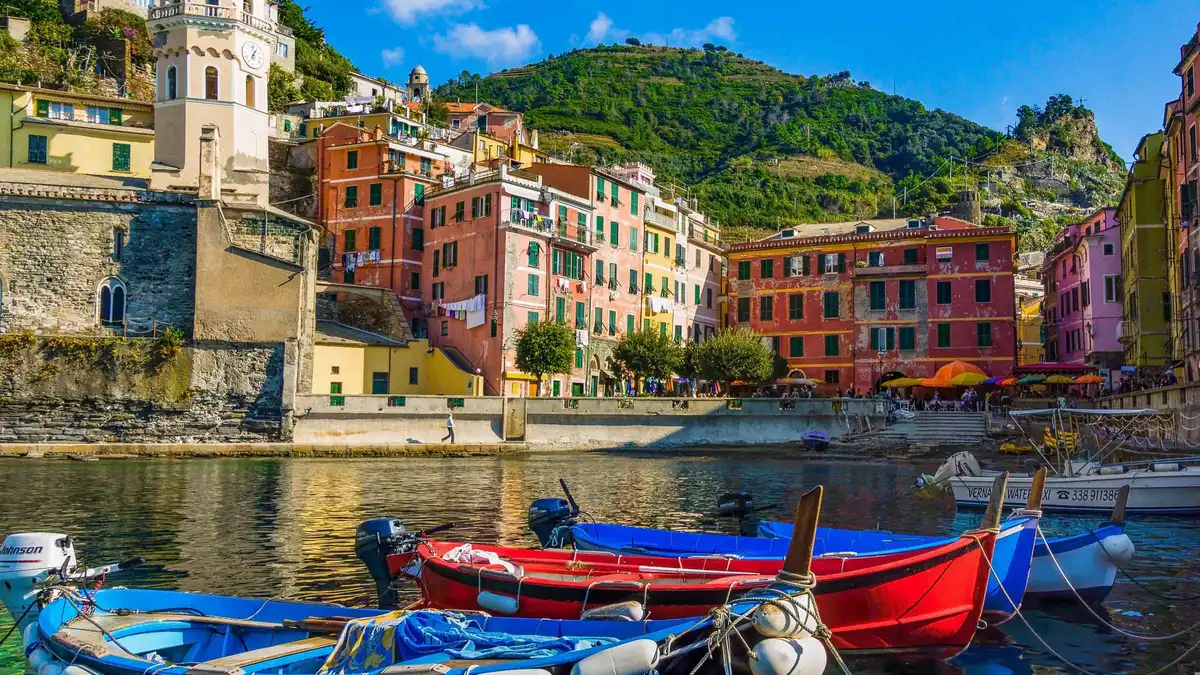 from $120.00
Monterosso: Cinque Terre Day or Sunset Boat Tour with Aperitif
A small motorboat runs out of Monterosso with a skipper and an on-board aperitif, in a morning, afternoon or sunset slot. Riders over 95 or under 13 are not accepted, and there is no stop to get off in any village.
Check AvailabilityPrices, ratings and details are the platform's own. Dollar figures are the listed prices. The platform bills in your account's currency.
Is Cinque Terre Worth Visiting: Questions
Is one day in Cinque Terre enough to make the trip worth it?
One day works if you accept the train as the spine of the day and skip the long trails. The reinforced service links all five villages, so you can tick off Monterosso's beach, Vernazza's harbour, Manarola at sunset and Riomaggiore's castle in a single long day. What one day does not allow is walking a long trail between villages, lingering in Corniglia after the 377-step climb, or seeing Manarola in both daylight and sunset light. The honest minimum to see all five villages and walk one long trail is two full days. If one day is all you have, go, but decide in advance which villages get your time. See how we would split the time in our 2 day Cinque Terre itinerary.
Is Cinque Terre worth visiting in winter?
Winter is the weakest window, and the service calendar shows why. The reinforced train service ends in early November and resumes mid March. The ferry runs a reduced winter timetable to 8 December and nothing is published after that for the rest of winter, so the boat option largely disappears. November averages 194mm of rain, the wettest month alongside October, and the park closes trail sections after storms with no card refund. The villages themselves stay open and are quiet, and Manarola lights its famous hillside nativity scene in the Christmas season, so a short winter trip is not pointless. But for a first visit, the sums favour the main season. Month by month detail is on our Cinque Terre weather page.
Is Cinque Terre overhyped?
We avoid verdict words and stick to verifiable facts. The UNESCO inscription of 1997 is real, and it recognises a cultural landscape, not a beach resort, so the reward is terraces, village layout and history rather than sand and nightlife. The villages are small, with populations from 195 in Corniglia to 1,301 in Monterosso, and the fullest train and ferry schedules run from mid March to early November, which is when conditions are busiest. No published crowd statistics exist in our research, so plan for pressure rather than a specific number. If you expect solitude, you will be disappointed. If you want a compact, car-free World Heritage coast, the substance is there. Plan around the calendar with our best time to visit Cinque Terre guide.
Is it worth visiting if I do not want to hike?
Yes. The railway reaches all five villages, and four of them sit directly at their stations. Only Corniglia requires a climb from the platform, 377 steps up the Lardarina staircase, and a shuttle bus covers that too. The ferry calls at Monterosso, Vernazza, Manarola and Riomaggiore, never at Corniglia because it has no pier, so you can see the coast entirely from the water if you prefer. The paid trails, the footwear rule and the Via dell'Amore booking all become optional rather than essential. You lose the terraced paths and the views between villages, but the villages themselves and the UNESCO landscape remain fully accessible without boots. Village by village detail is in our Cinque Terre villages guide.
How does Cinque Terre compare with the Amalfi Coast or Portofino?
Both are worth a trip and they suit different travellers, so we keep the argument on its own page rather than repeating it here. The short version from verifiable facts: Cinque Terre is five villages on one railway line with no visitor road between them, UNESCO listed in 1997, with a full day of train plus boat costing about US$72.70 (€64) by our calculation. The Amalfi Coast is larger, road based and generally more expensive to move around, while Portofino is a single village rather than a chain. What matters most is whether you want a car-free village hop or a coastal drive. The full head to head is on our Cinque Terre or Amalfi Coast comparison page.
See It Before You Decide
Three honest looks at the coast, including its off-season trade-offs.
Is Cinque Terre Really Worth the Hype?
An independent look at whether the coast lives up to its reputation.
Video: Trev and ChelsAre Cinque Terre WORTH Visiting?
A traveller's verdict after visiting all five villages.
Video: CheckYeti Travel VlogIs the Cinque Terre Worth It in the Off-Season?
What the quieter months trade away against the crowds of summer.
Video: Bottom Line Up FrontVideos load from YouTube only when you press play.
Prices, hours and terms are set by the venue or operator and confirmed at checkout.
We may earn a commission if you book through one of our links, at no extra cost to you. Full affiliate disclosure