 Cinque Terre City Guide
The Vernazza Flood of 2011
The Vernazza flood 2011 refers to what happened on 25 October, when torrential rain triggered flash floods and mudslides across the Cinque Terre. Vernazza and Monterosso al Mare took the worst of it. Nine people died across the affected area. Vernazza was buried under more than 4 metres of mud and debris in places. Monterosso's mayor put damage to homes and businesses in that village's historic centre at about US$42.10 million (€37 million). A separate estimate covering the wider affected area put damage at over US$113.70 million (€100 million). Both villages are rebuilt and receiving visitors today. This page sets out what happened, what the sourced figures actually say, what the recovery looked like, and how to walk these villages respectfully now.
Quick answer The short answer
On 25 October 2011 torrential rain sent flash floods and mudslides through the Cinque Terre. Nine people were killed across the affected area. Monterosso's mayor estimated about US$42.10 million (€37 million) of damage to homes and businesses in his village's historic centre, while a separate estimate covering the wider affected area put damage at over US$113.70 million (€100 million). The two figures come from different scopes and sources and are not directly comparable. Both Vernazza and Monterosso are rebuilt and open today. Read our Cinque Terre guide to visit the Cinque Terre with that history in mind.
Key takeaways
- Read what the village looked like before 2011 in Vernazza.
- Trail safety today still closes paths for weather, see Cinque Terre hikes.
- See the rebuilt village and Monterosso in Cinque Terre villages.
What Happened on 25 October 2011
The event was a rain event first and a flood event second.
The rain
Torrential rain fell across the Cinque Terre on 25 October 2011. The sources for this page record the day as one of intense rainfall that triggered flash floods and mudslides, without giving a specific millimetre figure for that single day. The general pattern of the Ligurian coast explains the mechanics.
The villages sit at the bottom of steep, short valleys. Rain that falls on the terraced hillsides above funnels quickly down toward the sea through narrow channels, and the villages sit exactly where those channels meet the water.
The flood and mudslide mechanism
As described in the sources, the rain triggered flash floods and mudslides. Water and mud moved down from the hills and through the villages with enough force and volume to bury streets, ground floors and in Vernazza's case the railway station. This is the mechanism that made the event so destructive: it was not river flooding that rose slowly over days, but fast-moving water and debris arriving in the space of the storm.
The two villages hit
Vernazza and Monterosso al Mare were the two villages devastated. Nine people were killed across the affected area as a whole. The sources do not give a per-village breakdown of the deaths, and this page will not invent one.
If you want to understand the geography that channelled the water, our pages on Vernazza and Monterosso al Mare describe both villages' layouts as they stand today.
The Damage in Vernazza
Vernazza, a village of roughly 700 people (the site's home facts pack lists 670 residents, a separate count from July 2024 gives 703), was covered in over 4 metres of mud and debris in places.
The railway station buried
Vernazza's railway station was buried under mud and debris. The station is the village's main practical link to the outside world, sitting on the Levanto-La Spezia line that carries all Cinque Terre trains. It being buried meant the village was cut off from the rail line at the same time as its streets were under mud.
The Cinque Terre Express is what makes the five villages work as a single destination rather than five isolated coves, so a station buried in mud was not a local inconvenience. It cut Vernazza off from Monterosso, Corniglia and every other stop on the line at the same time as the roads and paths above the village were unusable, which is part of why the event registered nationally rather than as a local flood story.
The historic centre
The historic centre suffered extensive damage to homes and shops. With more than 4 metres of mud and debris in places, ground floors, storage spaces and the small businesses that line the carugio, Vernazza's main street, were hit hardest. The village lives from fishing, wine and visitors, so damage to shops and homes was damage to the village's whole economic base.
Our Cinque Terre guide covers how the village works today.
What the sources do not say
No sourced figure in this pass gives a Vernazza-specific damage total, a month-by-month reopening timeline, or a rebuilt-versus-original breakdown of the buildings. Those details are not stated in the material behind this page, and we will not fill the gaps with estimates. What is observable and true: the village is rebuilt and open to visitors.
That gap matters for anyone trying to write a tidy narrative of the recovery: there is no single confirmed date on which Vernazza "reopened", because different parts of the village, the station, the harbour, the shops, almost certainly came back on different timelines. This page reports what is sourced and stops there rather than smoothing the story into a single before-and-after date.
The Damage in Monterosso
Monterosso al Mare, the northernmost of the five villages, was hit alongside Vernazza.
The mayor's estimate
Monterosso's mayor estimated about US$42.10 million (€37 million) in damage to homes and businesses in the historic centre. This is a village-specific figure with a defined scope: the historic centre, homes and businesses. It comes from the mayor's own estimate as reported in the sources for this page.
That kind of village-level figure, an elected official putting a number on the damage to his own community, is common after Italian natural disasters and is usually the first credible estimate available, well before any national or regional audit follows months later.
San Giovanni Battista
The parish church of San Giovanni Battista took over 2 metres of water and mud. The church, built between 1282 and 1307 in a basilica layout with a nave and two aisles, is one of the oldest buildings in the village and stands at the heart of the historic centre. Water and mud to that depth in a medieval stone building means damage well beyond furniture and flooring.
Two figures, do not merge them
You will see the number US$113.70 million (€100 million) attached to the 2011 event elsewhere, including in sources covering Vernazza. That figure is an estimate of damage across the wider affected area, sourced separately from Monterosso's €37 million. The two sources do not state whether their scopes overlap.
They measure different things at different scales, so they are not directly comparable and should never be added together into one total. Print both, name both scopes, leave them separate.
Vernazza Before the Flood
The disaster is one chapter in a very long story. The village existed for more than nine centuries before 2011.
A fortified town from 1080
The first records recognising Vernazza as a fortified town date to 1080. In 1209 about 90 local families pledged allegiance to the Republic of Genoa, folding the village into the Genoese sphere that shaped much of the Ligurian coast. Fortification was not decorative: the coast was raided, and the village was built to withstand it.
That fortification shaped the village's whole layout, with tall, narrow houses built close together along steep lanes rather than spread out, a defensive pattern that still defines Vernazza's carugio today. The 1209 pledge to Genoa placed the village inside a maritime republic that was, at the time, one of the dominant naval powers of the western Mediterranean, and that Genoese period left its mark on the church towers and the castle that still stand.
Doria Castle
Doria Castle was built in the 15th century as a lookout tower to protect the village from pirate raids. It stands above the village on the promontory, and it is one of the structures a visitor can read today as evidence of Vernazza's defensive past. The castle predates the flood by centuries and still defines the village's silhouette.
Doria was one of the great families of the Genoese Republic, and a castle bearing that name signals the village's integration into Genoa's defensive network along this stretch of coast. From the terrace beside it, the sightline runs the length of the harbour and out to sea, exactly the field of view a lookout post needed to spot an approaching raid before it reached the beach.
Santa Margherita d'Antiochia
The church of Santa Margherita d'Antiochia is first referenced in 1318, though scholars believe the structure itself dates to the 12th century. Its octagonal bell tower, built out of the apse during renovations in the 16th and 17th centuries, rises directly from the small harbour. Along with the castle, it is one of the two landmarks that anchor any walk through Vernazza, before and after 2011 alike.
Together with Doria Castle, the church anchors the two ends of Vernazza's small skyline, the defensive tower on the rock and the bell tower over the water, and both survived the flood standing even as the streets around them were buried.
Recognition before the flood
The Cinque Terre's UNESCO World Heritage inscription dates to 1997 and the national park to 1999. Both designations predate the flood by more than a decade, so the villages were already recognised and protected landscape when the storm came. That timing matters for how the 2011 event reads today: the flood did not create the reasons to protect this coastline, it tested a protection system that was already a decade old, and the park's post-flood trail-safety practice grew out of infrastructure and authority the UNESCO and park designations had already put in place.
How the Story Runs
-
1997
The UNESCO World Heritage inscription for Portovenere, Cinque Terre and the Islands dates from this year, more than a decade before the flood.
Source: UNESCO World Heritage Centre listing, site ID 826, via the site's home facts pack.
-
1999
Cinque Terre National Park was established, following the UNESCO inscription and also predating the flood.
Source: Parco Nazionale delle Cinque Terre official site, via the site's home facts pack.
-
25 October 2011
Torrential rain triggered flash floods and mudslides. Nine people were killed across the affected area. Vernazza was buried in over 4 metres of mud and debris in places and its railway station was buried. Monterosso's historic centre was heavily damaged and San Giovanni Battista took over 2 metres of water and mud.
Source: Wikipedia (Italian) village articles and the English Wikipedia Vernazza article, via the site's research packs.
-
Today
Both Vernazza and Monterosso are rebuilt and open, receiving visitors. The park's practice of closing trails for weather and storm damage is a live safety practice, and it is reasonable to connect that seriousness about trail safety to an event like 2011. A specific month-by-month reopening timeline for the villages is not sourced in this pass, so none is printed here.
Sources: park trail-status pages (dated snapshot in the site's research packs) for the closure practice. The reopening timeline is not stated in the sourced material.
Visiting Respectfully Today
Do
- Check the park's live trail-status page before any hike. Storm closures are exactly this park's safety practice, and the memory of 2011 is one reason the park treats them seriously.
- Read the rebuilt village as a working community of roughly 700 residents, not as a disaster site.
- Wear closed shoes with real soles on the trails. The park has banned open footwear on paid trails since 2019 and reported fines run from US$56.80 (€50) up to US$2,841.80 (€2,500).
- Use the Cinque Terre guide and the park's own information points for current rules on cards, trails and bookings.
- Buy from the shops, wine producers and restaurants in the village. A working local economy is what a rebuilt community needs most.
- Follow posted closure signs on trails without argument, even if the path looks fine from below.
Don't
- Don't expect flood memorials or museum displays about 2011. None is sourced in this pass, so go with no expectation unless you find one in person.
- Don't assume every trail is open. The the Cinque Terre Card never overrides a weather closure.
- Don't ask residents to retell the flood for your entertainment. If the subject comes up, let it come from them.
- Don't photograph damage or recovery work as if it were an attraction.
- Don't treat the village as a backdrop. People live in those houses year round.
- Don't add the two damage figures together when you talk about the event. They come from different scopes and sources.
Vernazza and Monterosso Today
Both villages are rebuilt, open and receiving visitors.
Walking the rebuilt villages
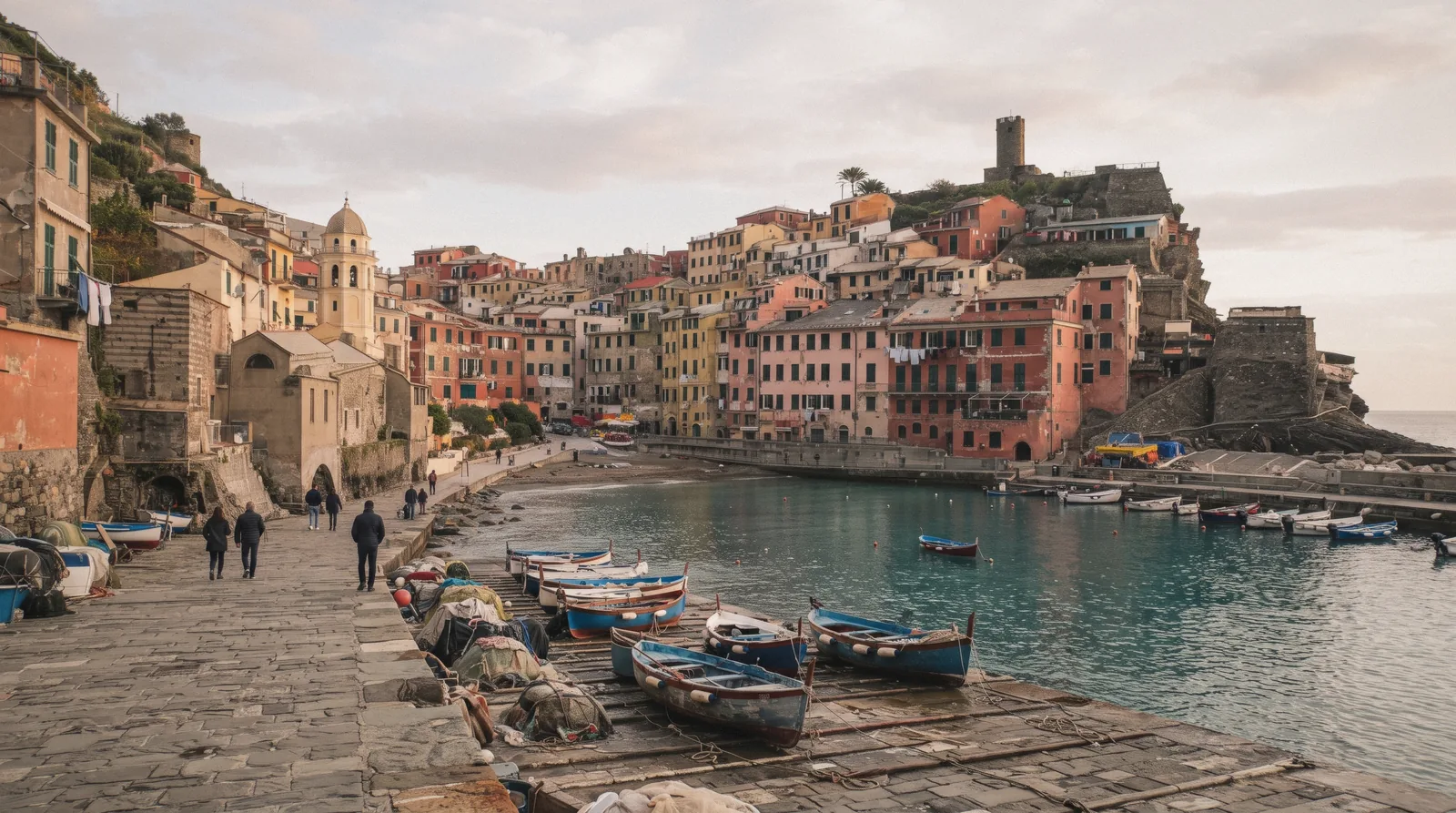
A visitor today sees working villages: Vernazza's harbour with its church and castle above it, Monterosso's historic centre and its Fegina beachfront. The flood is not the framing of a visit, and nothing about the streets announces it. That is the point of a recovery.
If you want the wider context of the coast and its Cinque Terre villages, our guide covers all five. A visitor who arrives with no prior knowledge of 2011 would have no reason to suspect it from the streets themselves, which is itself a measure of how thoroughly both villages were put back together in the years since.
Trail safety, shaped by the land
The park closes trails for weather and storm damage as a matter of routine practice. Paths shut, notices go up, and the card you hold does not override a closure. It is fair to connect that vigilance to the terrain: steep slopes above villages, fast runoff, and an event like 2011 in living memory.
Before you hike, check the live status and our Cinque Terre hikes page and the Cinque Terre National Park page.
What is not sourced
The exact recovery timeline, the current flood-defence works, and a rebuilt-versus-original breakdown of the village buildings are not stated in the sources behind this page. They are not printed here for that reason. The plain observable fact stands: both villages are open and visitors are welcome.
Where other flood-affected Italian towns publish anniversary reports or heritage-fund summaries, no such document from either comune surfaced in the research behind this page, so this section states the limit of what is known rather than filling it with a plausible-sounding account.
Seeing Vernazza Today
The best way to honour a rebuilt place is to visit it as it lives now. These two outings show the village from the sea and from its own hillsides.
 from $121.74
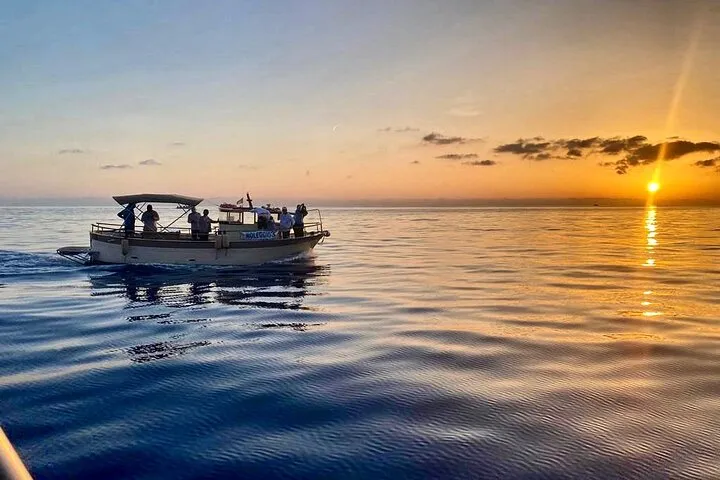
Cinque Terre Sunset Boat Tour with Aperitivo and Swim
Sea Breeze runs this sunset cruise from either Levanto or Monterosso with a swim stop and an aperitivo of local products included. Read the operator messages closely, since the boarding point can shift between the two towns depending on conditions.
Check Availability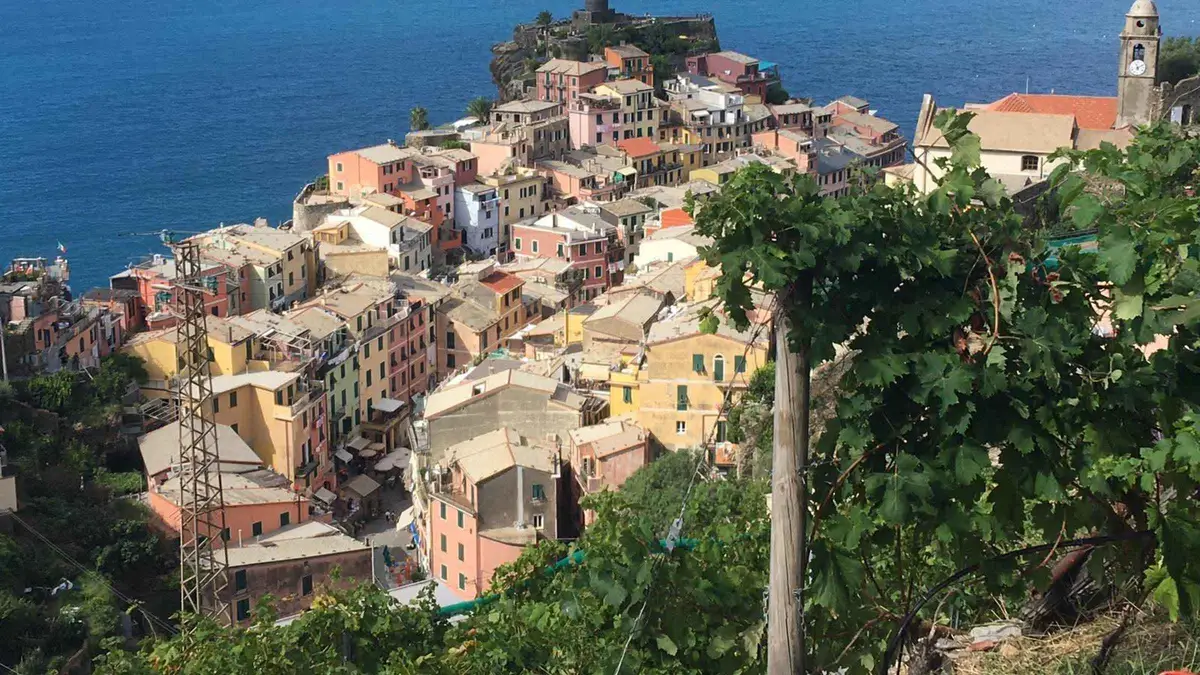 from $85.00
Vernazza: Wine Tasting and Scenic Vineyard Tour
A small family winery, Cheo, walks small groups from the Vernazza post office up into its own terraced vineyard for a tasting with a sea view, then back down. It's a shorter, cheaper outing than the guided vineyard treks sold as hikes.
Check AvailabilityPrices, ratings and details are the platform's own. Dollar figures are the listed prices. The platform bills in your account's currency.
The 2011 Flood: Your Questions
When did the Vernazza flood happen?
The flash flood and mudslides hit Vernazza and Monterosso al Mare on 25 October 2011, after torrential rain across the Cinque Terre.
How many people died in the 2011 Cinque Terre flood?
Nine people were killed across the affected area. The sourced material does not give a per-village breakdown, so none is printed here.
How much damage did the flood cause?
Two sourced figures exist and they measure different things. Monterosso's mayor estimated about US$42.10 million (€37 million) of damage to homes and businesses in his village's historic centre. A separate estimate covering the wider affected area put damage at over US$113.70 million (€100 million). The sources do not state whether the scopes overlap, so the figures are not comparable and should not be merged.
How deep was the mud in Vernazza?
Vernazza was covered in over 4 metres of mud and debris in places, and the railway station was buried under mud and debris.
Is Vernazza rebuilt and open to visitors?
Yes. Both Vernazza and Monterosso al Mare are rebuilt and receiving visitors today. A specific month-by-month reopening timeline is not stated in the sources behind this page.
Does the 2011 flood affect how the park is visited now?
The park routinely closes trails for weather and storm damage, and a Cinque Terre Card never overrides a closure. Given the terrain, the steep slopes above the villages and an event like 2011, that vigilance about trail safety is part of how the park is run today. Check the live trail status before any hike.
Watch
Three videos on this page's subject.
Vernazza Flood: October 25, 2011
Footage and account from the day of the flood itself.
Video: Save Vernazza2011 Alluvione Cinque Terre Monterosso Vernazza (raw footage)
Raw footage of the flood's aftermath in Monterosso and Vernazza.
Video: giuliano raveraVernazza, Italy: Weathering the Storm
A travel-show segment on Vernazza's flood and recovery.
Video: Rick Steves' Europe